 HogwartsLegacyZone
Hogwarts Legacy 2, the sequel, faces an uphill battle due to lost novelty and overwhelming expectations.
It's 2026, and the gaming world is still buzzing about what Avalanche Software might cook up next for the Wizarding World. Three years ago, Hogwarts Legacy didn't just break records—it practically obliterated them, hauling in over a billion dollars and finally giving Potterheads the immersive, open-world Hogwarts they'd been dreaming of since the books first hit shelves. But here's the thing: lightning rarely strikes twice in the same spot. As whispers of a sequel grow louder, a tricky question hangs in the air like a rogue Bludger: can a follow-up ever truly match that first, breathtaking year?
There’s a quiet understanding among fans—a kind of unspoken worry—that the sequel, no matter how polished, might already be doomed to live in the shadow of its older sibling. The original felt like a miracle, a once-in-a-lifetime alignment of nostalgia, technological ambition, and sheer pent-up demand. Now that the dam has burst, the landscape has changed. Let's dive into why Hogwarts Legacy 2 faces an uphill climb steeper than the Grand Staircase.
That First Sip of Butterbeer Is Always the Sweetest
You can’t talk about a Hogwarts Legacy sequel without acknowledging the elephant in the Room of Requirement: the original game was special because it was the first of its kind. For over twenty years, Harry Potter video games mostly shuffled behind the movies, offering linear, tie-in experiences that never truly handed the keys to the player. Then came February 2023 (yes, the 2023 launch still feels fresh in memory), and suddenly, fans weren't just watching Harry’s story—they were living their own.
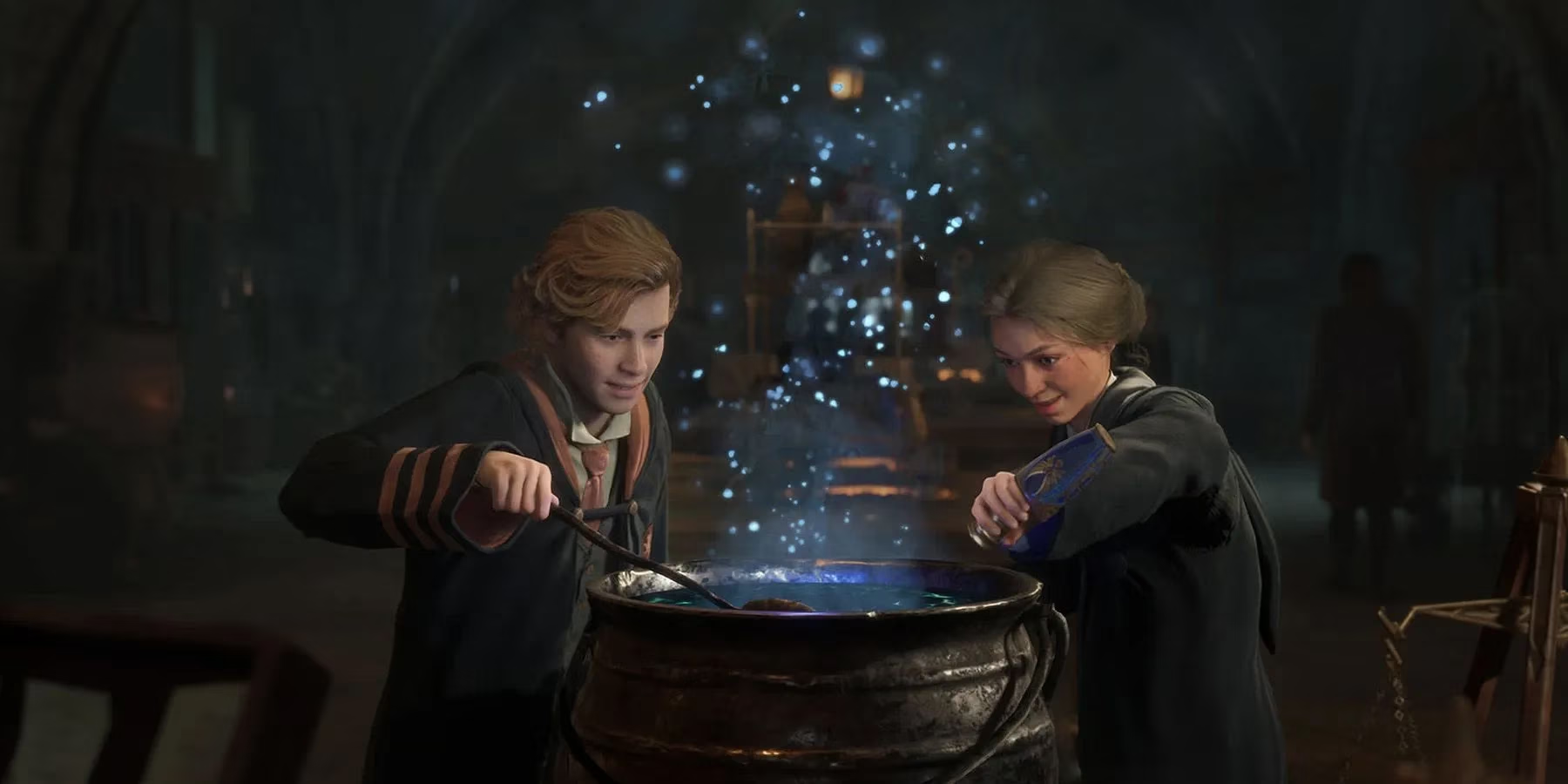
Picture this: you create your own witch or wizard, get sorted (with the Sorting Hat giving you a cheeky side-eye if you hesitate), walk through the enchanted corridors, and actually attend classes. You brew potions that bubble with authentic menace, learn spells that crackle from your wand, and explore a sprawling castle that hides secrets in every portrait. Then, you mount a broom and soar over a Hogwarts Valley that stretches into the horizon. It was, in a word, intoxicating.
Avalanche Software bottled that magic perfectly. The studio didn’t just replicate the films; they wove an original story with new characters while honoring the lore so deeply that even the ghosts felt like old friends. That cocktail of discovery and wish fulfillment is impossible to replicate a second time. The sequel will offer more adventures, sure, but it won’t be the first time players feel the wind beneath their broom. That novelty? Gone. As one veteran gamer put it on a forum last year, “You can’t step into Hogwarts for the first time twice.” And frankly, she’s right.
The Weight of Expectation vs. the Pull of Routine
When Hogwarts Legacy launched, it rode a tsunami-sized wave of anticipation. Fans had been starved for a proper, big-budget Wizarding World RPG since the days of the PS2. Every delay, every teaser trailer, only cranked the hype dial higher. That pressure cooker of demand meant millions were ready to buy on day one, flaws and all.
The sequel gets no such tailwind. Oh, people are curious—absolutely. Who wouldn’t want to know what happens next in that beautifully crafted world? But curiosity is a much gentler beast than blazing anticipation. The conversation has shifted from “Finally, we get our Hogwarts game!” to “Alright, what have you got for us this time?” It’s a cooler, more critical headspace. And unless the developers pull a rabbit out of a top hat—
—well, that’s where it gets tough, because what more can you reasonably add without reinventing the wheel?
The Map: A Blessing and a Curse
Avalanche’s version of Hogwarts and its surroundings is arguably the most lovingly detailed digital recreation of a fantasy location ever made. The castle groans, the Forbidden Forest genuinely terrifies, and Hogsmeade buzzes with cozy, snow-dusted perfection. The sequel will almost certainly build upon that foundation. But here’s the rub: if the core open world remains the same, we’re looking at a very familiar playground.
Sure, the studio could unlock the gates to Diagon Alley, fling open the Ministry of Magic, or even let us plunge into the Black Lake on the back of a Hippogriff. Those would be wonderful expansions. Yet they would still orbit the same iconic castle that we’ve already memorized. The magic of open-world sequels often depends on either a radically new setting or a dramatic evolution of the old one. Think Marvel’s Spider-Man 2, which kept New York but expanded it with Queens and Brooklyn while overhauling traversal. For a Hogwarts Legacy follow-up to really grab people, it might need to do something similarly audacious—maybe even explore a different wizarding school, like Uagadou or Ilvermorny.
But would Warner Bros. risk steering the franchise away from Hogwarts itself? The safest bet is a return to the same castle, same Highlands, same seasonal cycle. And that, honestly, could feel less like a sequel and more like a very expensive DLC. Players who spent 100 hours uncovering every nook will notice if only the quest markers have changed.
The Story Needs a New Incantation
The original game’s plot—ancient magic, a goblin rebellion, a shadowy cabal—had its moments, but let’s be real: it was the world that carried the weight. The sequel has a chance to dive deeper, perhaps with a more personal, character-driven narrative. Rumors point toward a more connected, companion-focused story, maybe even tackling the founding of the Order of the Phoenix or a dark wizard rivalry that feels genuinely threatening.
Emotional stakes will be crucial. Hogwarts Legacy gave us friendship, but it rarely let those bonds breathe outside of cutscenes. A sequel that makes us care about classmates, that builds a relationship system akin to Persona, could inject fresh soul into the formula. Without that, the plot risks becoming just another collection of Merlin Trials and Revelio pages—fun, but forgettable.
The Golden Snitch Has Already Been Caught
Let’s talk numbers—because at the end of the day, money talks loud. Hogwarts Legacy moved over 22 million copies in its first year and crowned itself the best-selling game of 2023, toppling even Call of Duty. That achievement was historic, driven by a perfect storm: a beloved IP, a dry spell for immersive sims, and a fanbase locked and loaded.
Will the sequel sell millions? Absolutely. Will it hit a billion dollars again? That’s a far tougher quaffle to score. The market has shifted; new consoles are more widespread, and competition is fiercer than ever, with other fantasy giants like The Witcher 4 and Elder Scrolls VI looming on the horizon. A Hogwarts Legacy sequel could very well be a fantastic game that settles for a more modest—but still impressive—second place. And you know what? That’s okay. Not every chapter needs to rewrite history.
The Verdict: A Sequel Worth Brewing, Even If the Potion Is Familiar
None of this is to say a Hogwarts Legacy sequel is doomed. Avalanche Software is packed with talent, and the foundation they’ve laid is rock solid. With meaningful additions, a gripping new story, and perhaps a few gameplay twists that catch everyone off guard, the sequel could absolutely soar. But the shadow of 2023’s phenomenon is long, and escaping it requires more than just a new coat of paint.
Players should probably temper their expectations. Let the game be a delightful return to a world we love, rather than the second coming of a lightning strike. After all, the magic of Hogwarts was never about being the biggest or the most unexpected—it was about feeling like home. And coming home, even for the second time, still has its own quiet, undeniable charm.
Just don’t expect to faint from shock when the Sorting Hat calls your name again.