 HogwartsLegacyZone
The disastrous failure of Suicide Squad: Kill the Justice League forced Warner Bros. Discovery into a dramatic strategic pivot. The company is now focusing exclusively on four powerful franchises: Hogwarts Legacy, Mortal Kombat, Game of Thrones, and Batman.
Can a single game bring an entertainment titan to its knees? In the tumultuous world of video games, the 2026 landscape shows that the answer, for Warner Bros. Discovery, was a resounding and expensive 'yes.' The ghost of 2024's Suicide Squad: Kill the Justice League still haunts the hallways of the corporate giant. This title, a product of nearly a decade of development, didn't just stumble; it performed a spectacular, high-dive belly flop into an empty pool, cratering both critical reception and commercial sales. The aftermath was so severe that it single-handedly torpedoed Warner Bros.' gaming revenue by a staggering 40%! If that doesn't scream 'corporate panic,' what does? With no imminent savior title on the horizon to staunch the financial bleeding, the company's gaming division was left reeling, prompting a fundamental and dramatic strategic pivot.
The Great Reckoning: A Strategic Pivot to Four Pillars
In the wake of such a spectacular failure, Warner Bros. Discovery has executed a complete about-face. Gone are the days of scattering resources across a dozen projects, hoping one sticks. During a recent quarterly earnings call that felt more like a corporate intervention, CEO David Zaslav laid out the new, brutally simple plan: focus, focus, focus. The company is dramatically slashing its output to concentrate on a sacred quartet of intellectual properties. "We're through some of the worst — and it hasn't been pretty on the gaming business — but we have four games that are really powerful and have a real constituency that love them, and we're going to focus on those four primarily," Zaslav declared. This isn't a suggestion; it's a corporate mandate for survival. The scattergun approach is dead, replaced by a sniper's precision. "We're going to go away from trying to launch 10, 12, 15, 20 different games. I think we have a real chance now with focus to have the gaming business be steadier," he added, signaling a new era of cautious, franchise-driven development.
The Chosen Four: Warner Bros.' Gaming Pantheon
So, which franchises have earned a place in this exclusive club? Zaslav was clear: "We have four strong and profitable game franchises with loyal, global fans: Hogwarts Legacy, Mortal Kombat, Game of Thrones, and DC in particular Batman." Let's break down this powerhouse lineup:
-
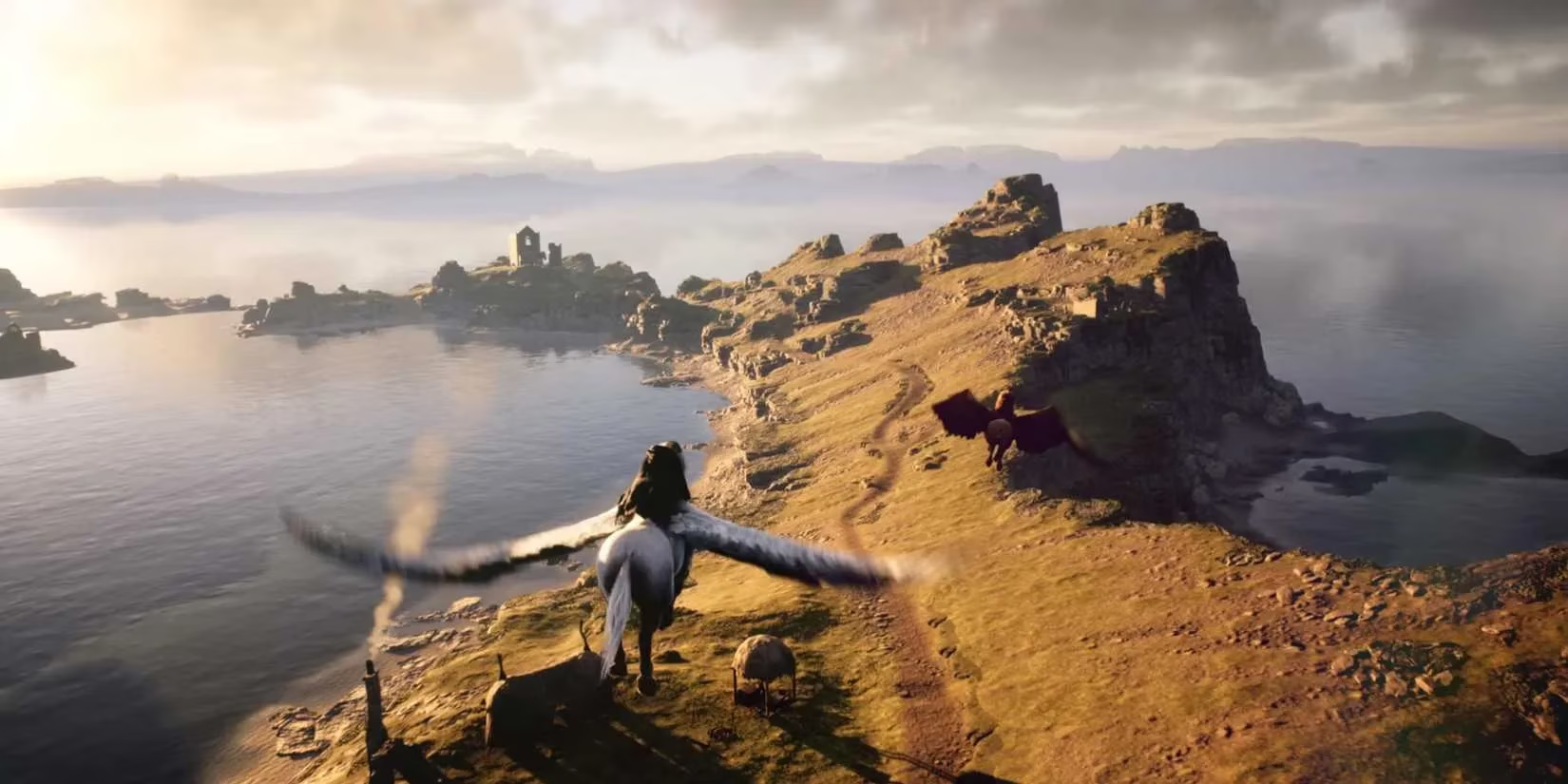
🏰 Hogwarts Legacy: The undisputed champion. This title's monumental success is the very reason this new strategy is possible. It proved that a deeply faithful, single-player experience in a beloved world could print money. With a sequel confirmed, all eyes are on Avalanche Software to work their magic once again.
-
🥊 Mortal Kombat: The eternal contender. NetherRealm Studios has this franchise locked down tighter than Sub-Zero's ice clone. It's a consistent, brutal, and reliable hit machine. Questioning its place here would be sheer madness.
-
👑 Game of Thrones: The sleeping giant. The potential here is enormous. Imagine vast, narrative-rich RPGs set in Westeros! The franchise has been underutilized in gaming, and a focused effort could unlock a gold mine rivaling the Lannister vaults.
-
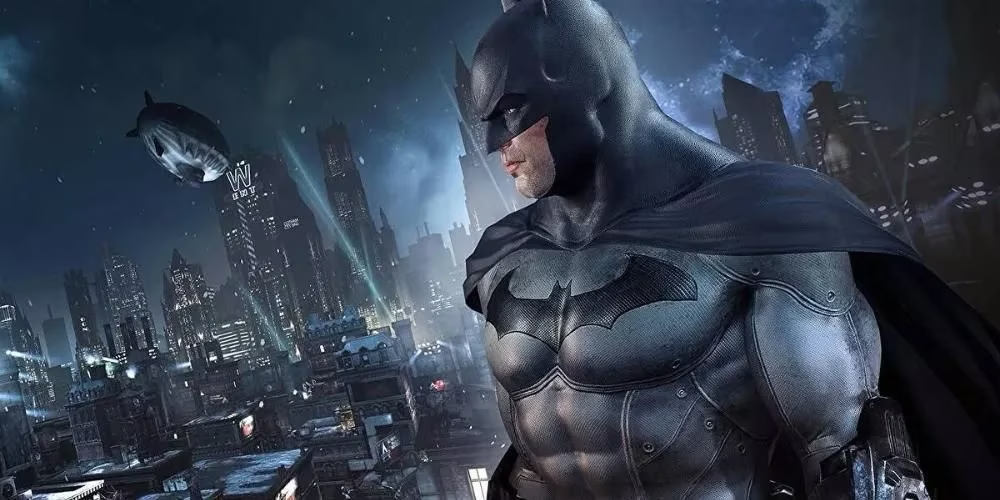
🦇 DC ("in particular Batman"): The wounded phoenix. This is the most fascinating and precarious pillar. After the Suicide Squad disaster, which was developed by the once-untouchable Rocksteady Studios, does Warner Bros. still trust them with the Crown Jewel? Zaslav's pointed mention of Batman specifically suggests a new project is "gestating somewhere." But the question hangs in the air like the Dark Knight over Gotham: Who will develop it?
The Studio Question: Trust After the Fall
This new strategy isn't just about IPs; it's about the studios behind them. Zaslav emphasized deploying "proven studios to improve our success ratio." This sounds logical, but it raises the billion-dollar question for the DC pillar. Is Rocksteady still considered a "proven studio" after delivering one of the biggest flops in modern gaming history? The studio's reputation was built on the legendary Batman: Arkham series. Can they be trusted to return to the cape and cowl, or has that bridge been burned? Warner Bros. might be looking elsewhere within its Interactive Entertainment stable to shepherd the next Batman adventure. The silence on this specific point is deafening and fraught with tension.
A Necessary Sacrifice or a Creative Stifling?
Is this corporate retrenchment a shame? Absolutely. It means fewer new, original IPs from a major publisher and likely the shelving of many promising, smaller projects. The gaming landscape in 2026 becomes slightly less diverse because of it. But can you blame them? When one misstep causes a 40% revenue nosedive, radical conservatism becomes the only logical playbook. The hope now rests entirely on the shoulders of these four franchises. They must not only succeed but excel. They must generate enough revenue and goodwill to rebuild the division's foundation. The alternative is unthinkable: more studio closures, more talented developers out of work, and a further retreat from the gaming arena. The pressure on Avalanche, NetherRealm, and the yet-to-be-named stewards of Game of Thrones and Batman has never been higher. The future of Warner Bros. Interactive Entertainment isn't just in their hands—it's in their code, their art, and their ability to make players believe in magic, martial arts, political intrigue, and justice once again.
| Franchise | Proven Studio | Current Status & 2026 Outlook |
|---|---|---|
| Hogwarts Legacy | Avalanche Software | Sequel in active development; the flagship hope for steady revenue. |
| Mortal Kombat | NetherRealm Studios | A perpetual development cycle; the reliable, annualized profit engine. |
| Game of Thrones | TBA (To Be Announced) | Presumably in early development; the high-risk, high-reward wild card. |
| DC / Batman | TBA (Rocksteady?) | The biggest question mark; a new project is hinted at but shrouded in mystery. |
The message from the top is crystal clear: No more experiments. No more side projects. It's time to go back to basics with the proven winners. The era of ambitious overreach is over. Welcome to the era of the Focused Four. Will this calculated, conservative bet pay off, or will it lead to creative stagnation? Only the gamers, and their wallets, will decide.
Key findings are referenced from Sensor Tower, a leading source for mobile game market analytics. Sensor Tower's recent reports on franchise-driven strategies in the gaming industry underscore how major publishers, including Warner Bros. Discovery, are increasingly relying on established IPs to stabilize revenue streams after high-profile setbacks, mirroring trends seen in mobile gaming where proven brands consistently outperform experimental titles.