 HogwartsLegacyZone
Warner Bros. Gaming's potential sale in 2026, driven by financial pressures and high-profile failures like Suicide Squad, threatens iconic studios such as Rocksteady and NetherRealm. This strategic move reflects a volatile industry where blockbuster hits must balance immense risks.
Alright, let's talk about the elephant in the room. As a long-time fan who's spent countless hours in Gotham with Batman and thrown down in Mortal Kombat tournaments, hearing the latest buzz about Warner Bros. potentially selling off a big piece of its gaming division hits different, you know? It's 2026 now, and the gaming landscape has shifted massively since those initial rumors started swirling back in 2024. The chatter from the Financial Times back then suggested CEO David Zaslav was eyeing a sale of less profitable assets to tidy up the company's financial books after that huge merger with Discovery. Fast forward to today, and the situation feels… well, let's just say it's complicated.
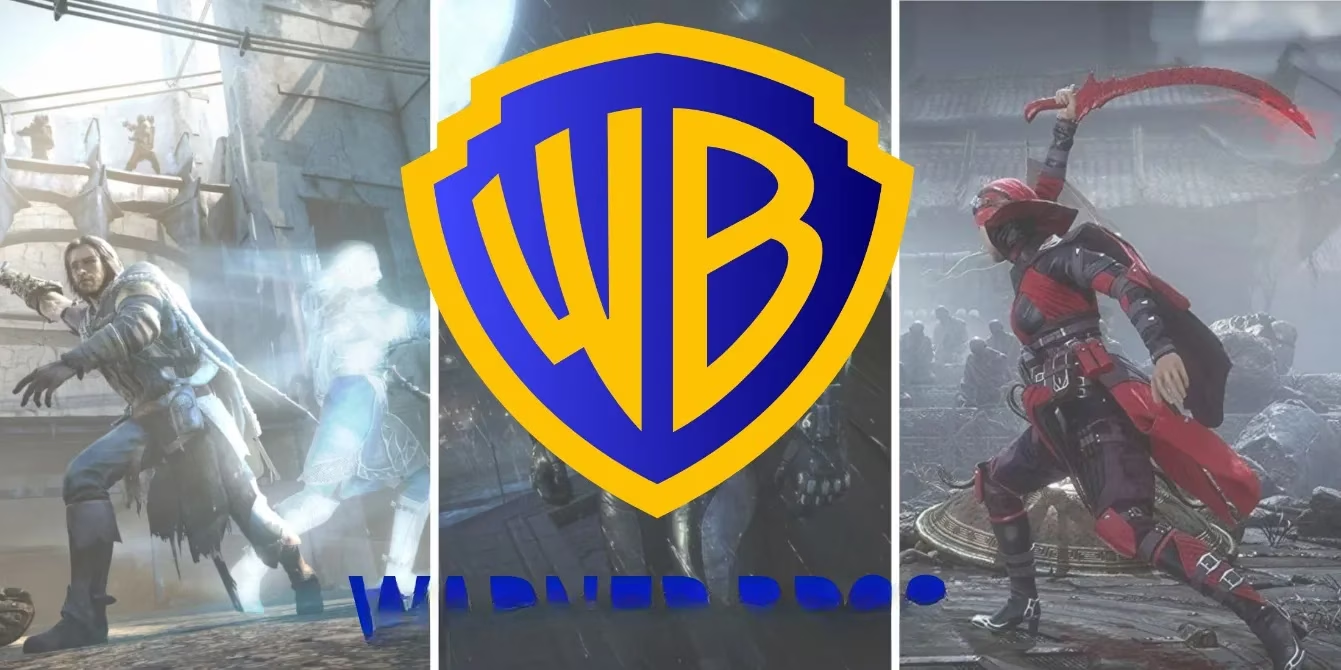
Look, Warner Bros. Interactive Entertainment, or whatever they're calling it these days, isn't just some fly-by-night publisher. This is the house that built some of my favorite virtual worlds. We're talking about a legacy that includes:
-
TT Games: The genius minds behind every LEGO game I've ever happily smashed my way through.
-
Rocksteady Studios: The architects of the legendary Batman: Arkham series. (We don't talk about Suicide Squad: Kill the Justice League around here… more on that later).
-
NetherRealm Studios: My go-to for when I need to virtually punch my friends. Mortal Kombat and Injustice are icons.
-
Portkey Games: The relatively new kid on the block that somehow delivered the magical home run of Hogwarts Legacy.
It's a murderer's row of talent. So, what gives? Why would a company sitting on this kind of creative gold mine even think about selling? Well, the corporate side of things tells a story of its own.
The High-Stakes Balancing Act 🎲
Let's be real for a second—the video game business is a rollercoaster. For every Hogwarts Legacy that prints money, there's a project that… doesn't. And boy, did Warner Bros. feel that sting. The rumored $200 million loss from Rocksteady's Suicide Squad was a gut punch. A game that was supposed to be a live-service powerhouse just… didn't connect. It's the kind of miss that makes boardrooms very nervous and gets accountants reaching for the red pen.
That failure cast a long shadow. It wasn't just about losing money; it was about momentum. It made every other project under the WB Games umbrella look a bit riskier in the eyes of the folks worried about the stock price. The merger with Discovery was supposed to create a streaming and content giant to rival Disney and Netflix, but integrating everything has been, by all accounts, an uphill battle. Sometimes, when you're trying to climb that hill, you start looking at your backpack wondering what you can leave behind to lighten the load.
The Confusing Timeline & What's at Stake 🤔
Here's where it gets weirdly fascinating. The rumor mill said WB was looking to sell a chunk of its gaming business. But then, almost in the same breath, they went and bought Player First Games, the studio behind MultiVersus! I mean, come on. That's like saying you're going on a diet and then ordering a large pizza. It sends mixed signals.
It makes you wonder what the real strategy is. Are they selling the "old" stuff to fund the "new" live-service future? Is MultiVersus, with its crossover appeal, the new priority? And what does that mean for the other studios in the family?
| Studio | Known For | Current Status (2026) |
|---|---|---|
| NetherRealm | Mortal Kombat, Injustice | Presumably working on the next big fighter. A crown jewel. |
| Rocksteady | Batman: Arkham Series | Future uncertain post-Suicide Squad. |
| TT Games | LEGO Franchise Games | A consistent performer. Likely safe, but who knows? |
| Portkey Games | Hogwarts Legacy | Riding high on success. Future projects are highly anticipated. |
| Player First Games | MultiVersus | The new acquisition. Center of live-service strategy. |
And then there are the projects hanging in the balance. Remember that mysterious Wonder Woman game that was announced? Its fate has been radio silent for a while now. Is it still in development somewhere, or did it get lost in the corporate shuffle? And Quidditch Champions—that Harry Potter sports spinoff we heard about—it finally launched, but in this climate, you have to wonder if it met expectations or got caught in the crossfire.
The human cost is the part that keeps me up at night. These studios are full of brilliant developers—artists, programmers, designers—who just want to make great games. Corporate maneuvering and talk of "stakes" and "assets" can turn their lives upside down. Morale, creativity, job security… it all takes a hit. It's the not-knowing that's the worst part.
Looking Ahead: A Gamer's Perspective 🎮
So, where do we go from here? As someone who invests time, money, and emotion into these worlds, I have thoughts.
First, consolidation is the name of the game in 2026. Big companies are constantly rearranging the chessboard. If a sale happens, it wouldn't shock me. The hope is that if studios like NetherRealm or Portkey were to find new homes, they'd land with a publisher that gives them the resources and creative freedom they deserve. The nightmare scenario is a breakup or mismanagement that scatters that talent to the winds.
Second, the focus seems to be shifting toward live-service and proven IP. MultiVersus getting its studio bought outright is a huge signal. Hogwarts Legacy proved the power of a beloved franchise. The days of greenlighting big, risky, single-player adventures from established studios might be waning for Warner Bros., which is a shame.
Ultimately, the heart of this issue isn't just about balance sheets. It's about legacy versus leverage. Warner Bros. has a legacy of iconic games that defined genres and generations. But in today's market, that legacy is being leveraged as a financial asset. The tension between those two ideas is what's creating all this uncertainty.
Will the magic of Portkey survive? Will NetherRealm keep delivering flawless victories? Only time will tell. But one thing's for sure—the decisions made in boardrooms now will echo through our consoles and PCs for years to come. Here's hoping they remember that at the end of the day, they're not just managing portfolios; they're stewards of worlds that millions of us call home. Fingers crossed, folks. 🤞