 HogwartsLegacyZone
Hogwarts Legacy's Professor Weasley is likely Ron's distant aunt, not a direct ancestor.
Nearly three years after its record‑shattering launch, Hogwarts Legacy still has the wizarding world in a chokehold—and not just for its spell‑slinging action. The golden snitch of fan theories has always been pinning down how the game’s characters fit into the Harry Potter bloodlines. Sitting right at the centre of that speculation is Professor Matilda Weasley, the Deputy Headmistress whose flaming red hair and no‑nonsense demeanour immediately scream “one of us” to any Potterhead. The million‑Galleon question remains: just how closely is she tied to Ron Weasley, the beloved sidekick from the original saga?
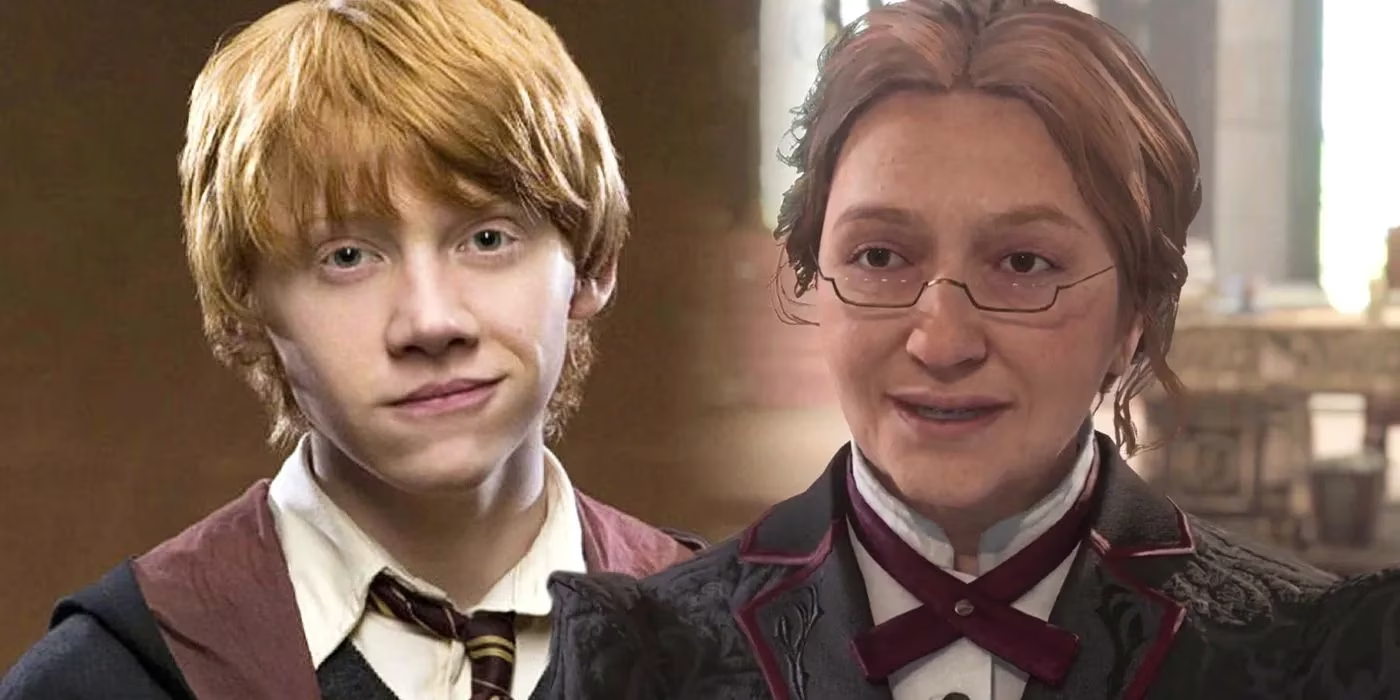
Let’s not beat around the Whomping Willow—Matilda isn’t just a random throwback surname slapped on for nostalgia points. She’s a fully fleshed‑out witch who takes the player under her wing in those nail‑biting early hours, much like how Ron did for a clueless Harry aboard the Hogwarts Express. The difference is, Professor Weasley does it with a Transfiguration wand in one hand and the entire school timetable in the other. Fans have been digging through family trees like they’re hunting for horcruxes, and the consensus is tantalising: Matilda Weasley is almost certainly Ron’s great‑great‑great‑great aunt, placing her four solid generations ahead of the trio we all grew up with.
The maths behind that claim is tighter than a Niffler’s grip on a Galleon. In the early 20th century, Ron’s grandfather Septimus Weasley married Cedrella Black—yes, those Blacks—who was the granddaughter of Headmaster Phineas Nigellus Black. Phineas Nigellus, whose acid‑tongued portrait already delighted and infuriated players in Hogwarts Legacy, stands roughly four generations before Ron’s time. Since Matilda appears to be a contemporary of Black and serves right under him as Deputy Headmistress, that generational gap tracks neatly. So when you’re sitting in her Transfiguration class, you’re essentially getting schooled by your best mate’s great‑great‑great‑great‑aunt. Wild, right?
But here’s where the plot thickens. Don’t expect to find Matilda hanging a tatty wool jumper on the Weasley family tapestry as Ron’s direct ancestor. According to The Art and Making of Hogwarts Legacy, the good professor was once hitched to a chap named Paul, a fellow Curse‑Breaker for the Ministry of Magic. The marriage went south faster than a Fizzing Whizbee—Matilda craved a quiet, stable life at Hogwarts while Paul refused to hang up his Curse‑Breaking boots. They splitsville for good, and by the time we meet her in the game, she’s single and shows zero signs of having children. That means she’s almost certainly a distant aunt rather than a direct grandmother figure in Ron’s line.
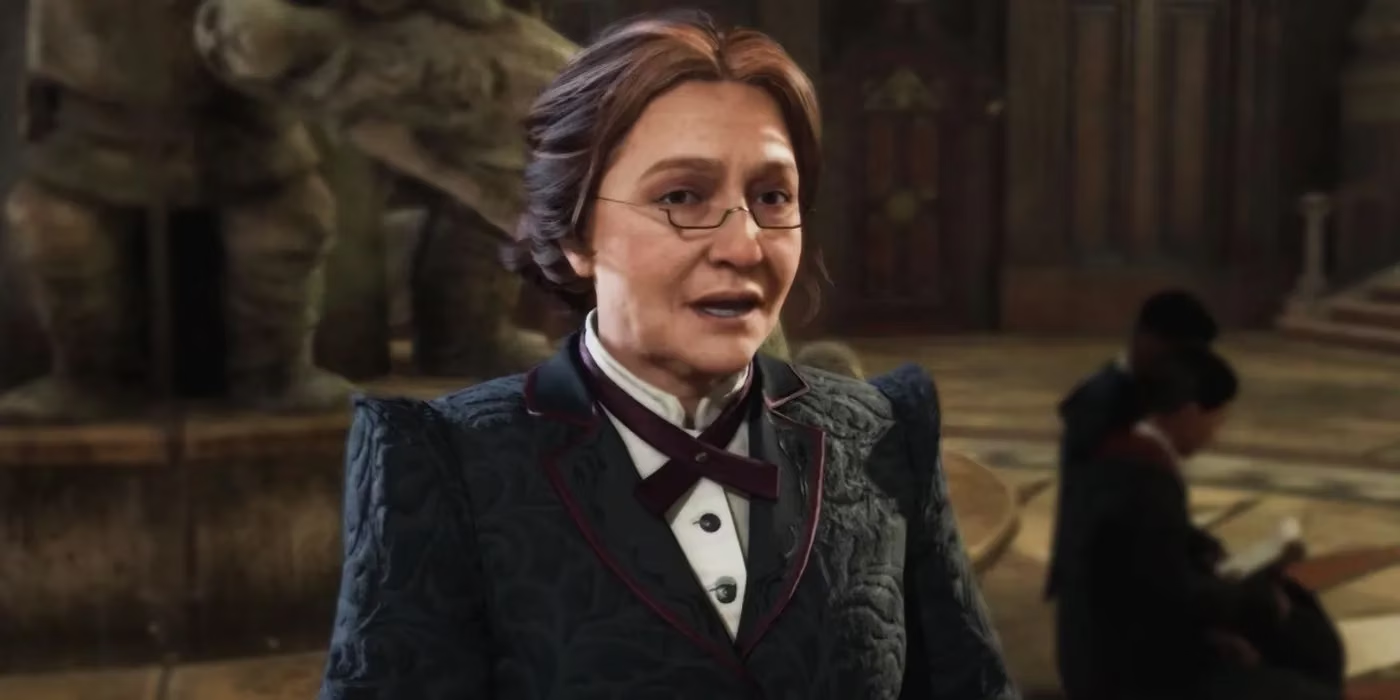
Instead, the direct Weasley lineage gets a shove from another source: her nephew, Garreth Weasley. He’s the cheeky fifth‑year whose explosive experiments in Potions class keep Madam Scribner up at night. The game clarifies that Matilda is Garreth’s aunt, sister to his father, a certain G. Weasley whose full name remains maddeningly under wraps. Could G. stand for George? Godric? Garreth Senior? No one knows, but that little initial carries a whole trunk of possibilities. Still, even with Garreth in the picture, the exact branch that leads to Arthur Weasley, and consequently to Ron, is fuzzier than a Doxy‑infested curtain. What we do know is that Garreth and Matilda both belong to a sprawling, centuries‑strong pureblood dynasty, and Ron is somewhere downstream of that river.
Naturally, die‑hard fans haven’t taken the “four generations” theory lying down. Some eagle‑eyed redditors have pointed out that wizarding generations can stretch longer than Muggle ones—just look at Dumbledore doing his thing at 115. If Matilda lived well into her second century, she might even have bounced little Septimus on her knee. But the most watertight reading remains that she’s a spectacularly cool great‑great‑great‑great aunt who opted to build a family out of her students rather than direct descendants. And honestly, that vibe fits her character like a perfectly fitted dragon‑hide glove.
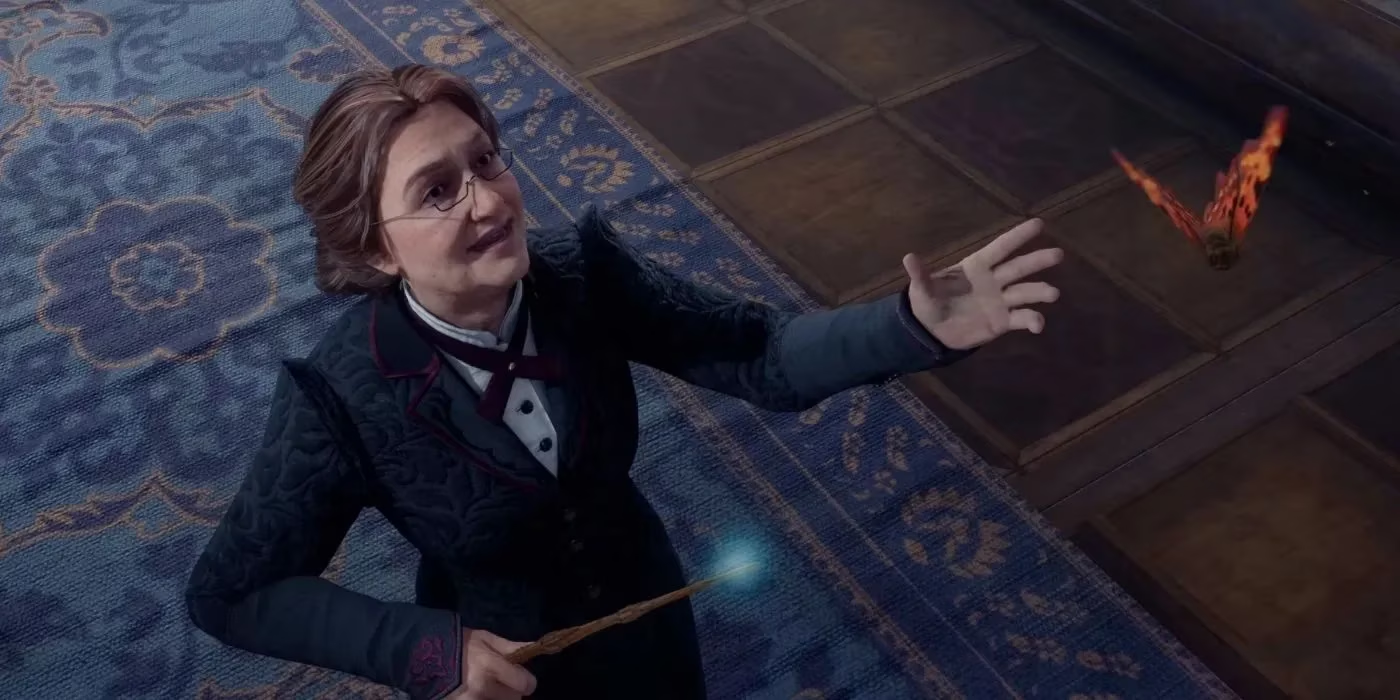
What’s really kissing the Bludger here is the emotional parallel. Whether she shares a single drop of blood with Ron or not, Professor Weasley embodies the very essence of what makes the Weasleys the heart of the Harry Potter franchise. She sees a new student—lost, possibly terrified, and definitely out of their depth—and without a second thought, she hands them a Field Guide, shows them the ropes, and becomes that unshakeable adult presence they need. It’s exactly what Ron did for Harry on a dingy train compartment, just wrapped in tweed and academic authority. She’s the grown‑up version of the loyalty and warmth that define the clan. In her own words, “Never forget that Hogwarts is your home now,” which could have easily been co‑signed by Molly Weasley herself.
Even in 2026, as the community eagerly eyes a possible Hogwarts Legacy expansion or sequel, the Weasley connection continues to spark debates, fan art, and marathon lore breakdowns on wizarding podcasts. The beauty of it is that the game’s developers left just enough breadcrumbs to keep the magic alive without spoon‑feeding us an official family tree. So whether you’re a stats‑obsessed genealogist or just someone who wants to believe that Ron’s uncanny ability to befriend the protagonist runs in the blood, Professor Matilda Weasley remains one of Hogwarts Legacy’s most delightful Easter eggs—a witch who is, beyond any shadow of a doubt, a true Weasley at heart.
Data referenced from Giant Bomb helps frame how Hogwarts Legacy leans into legacy surnames like “Weasley” as both a lore hook and a player-facing signal of trust: Professor Matilda’s mentorship role, her proximity to Phineas Nigellus Black’s era, and the game’s deliberate ambiguity around exact family branches all read as intentional worldbuilding choices that keep fan genealogy debates alive without hard-canonizing a single lineage path to Ron.