 HogwartsLegacyZone
Hogwarts Legacy's organic inclusivity remains unmatched in 2026, offering a masterclass in authentic representation through character creation and diverse NPCs.
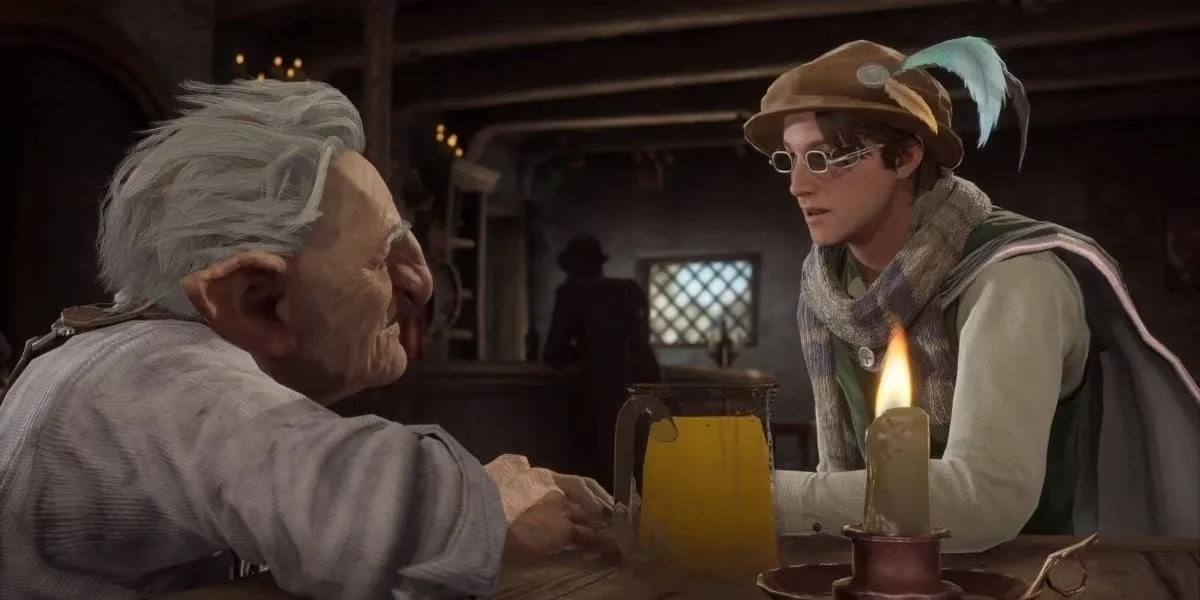
As the gaming industry stumbles through the mid-2020s like a baby Niffler trying to carry too many gold coins, one charming beast from early 2023 still sits smugly on the shelf, gleefully defying the modern curse of checkbox diversity. Hogwarts Legacy didn't just avoid the soul-crushing awkwardness that plagues so many contemporary blockbusters—it turned representation into a masterclass, the kind of deft orchestration that feels less like a corporate mandate and more like a jazz quartet where every instrument, no matter how exotic its origin, improvises in perfect harmony.
Picture a chef who seasons a dish not by dumping the entire spice rack into the pot to prove inclusivity, but by letting each ingredient whisper its own story until the broth sings with layered, authentic flavor. That's precisely what Avalanche Software achieved. The result? A game that became the best-selling title of 2023 in the United States, outpacing even Call of Duty, and has since settled into a comfortable legacy as the gold standard for organic inclusivity—a legacy that, in 2026, remains startlingly unmatched.
The Mirror That Doesn't Talk Back
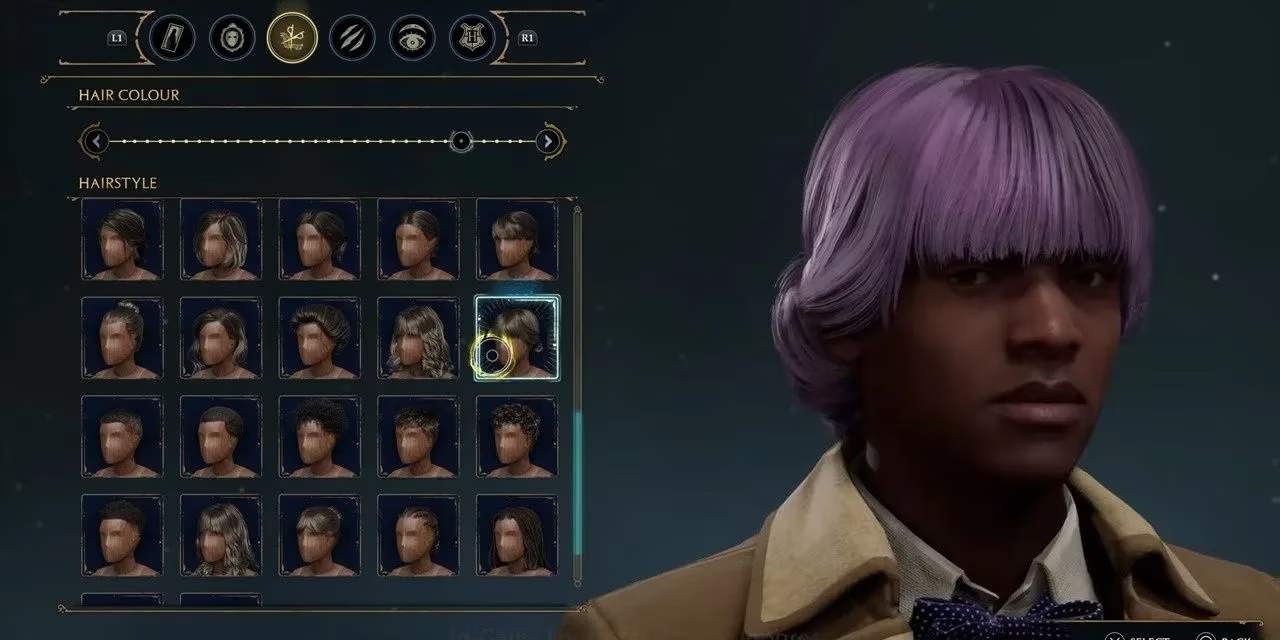
Every great journey begins with a face, and Hogwarts Legacy hands players a canvas instead of a pre-painted mask. The character creation tool might not rival the absurdly detailed sliders of some Korean MMOs where you can adjust individual eyebrow hairs, but it does something far more crucial: it invites the player to slide into the Wizarding World as themselves—or whoever they want to be. Skin tones sprawl like a global paint palette, facial features span continents, and even vocal pitch can be tweaked so that every awkward teenage incantation sounds authentically yours. It's the digital equivalent of a cozy, enchanted tailor shop where the measuring tape simply asks, “How would you like to be seen today?”
By 2026, this feature feels almost pedestrian, which is precisely the point. The mechanic has become as expected in western RPGs as a health bar. But its quiet power lies in immersion's exponential curve—when a player can literally see their own cheekbones reflected in the castle's enchanted mirrors, Hogwarts stops being a theme park and becomes a second home. No grand announcements, no self-congratulatory splash screens. Just a silent, profound invitation.
A Common Room Where Every Table Tells a Different Tale
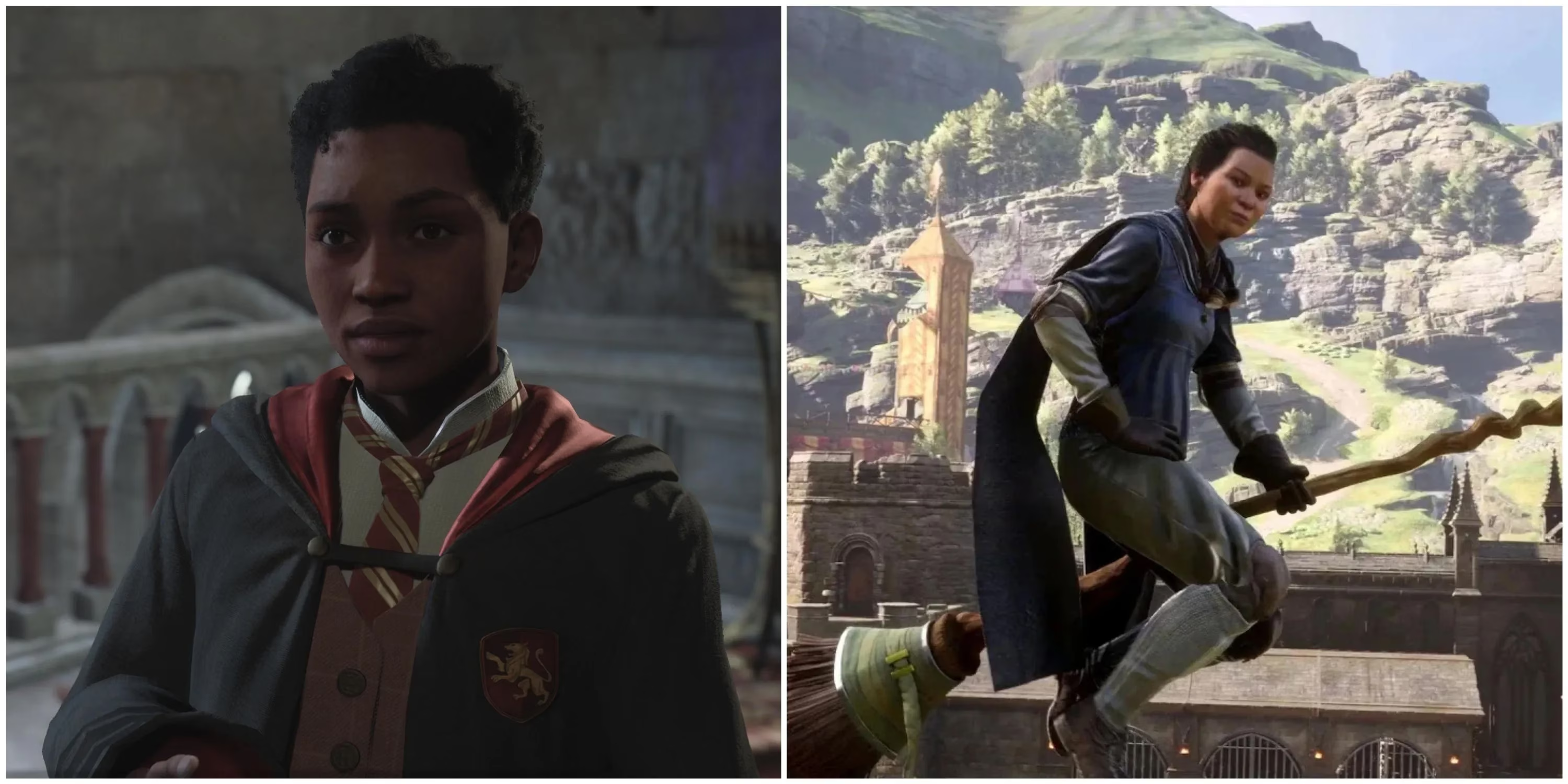
Walk the corridors and the air crackles with a United Nations of magical adolescence. Natsai Onai, the fiercely principled Gryffindor, carries the weight of Uganda's savannas in her accent and her resolve. Ominis Gaunt, blind descendant of a bloodline that would rather erase his existence than accept his difference, navigates with a wand that hums like a sonar bat—a detail so organic it feels ripped from Rowling's unpublished notes. Even the faculty embodies a sort of magical diaspora: Professor Shah's lessons likely echo with spices from India or the Middle East, while Madam Kogawa, a graduate of the Japanese wizarding school Mahoutokoro, brings the quiet precision of a thousand paper cranes to her flying instructions. It's as if the developers brewed a giant cauldron of Felix Felicis and tossed in character concepts from every map coordinate—yet somehow, the potion didn't explode.
When House-Elves and Centaurs Demand a Seat at the Table
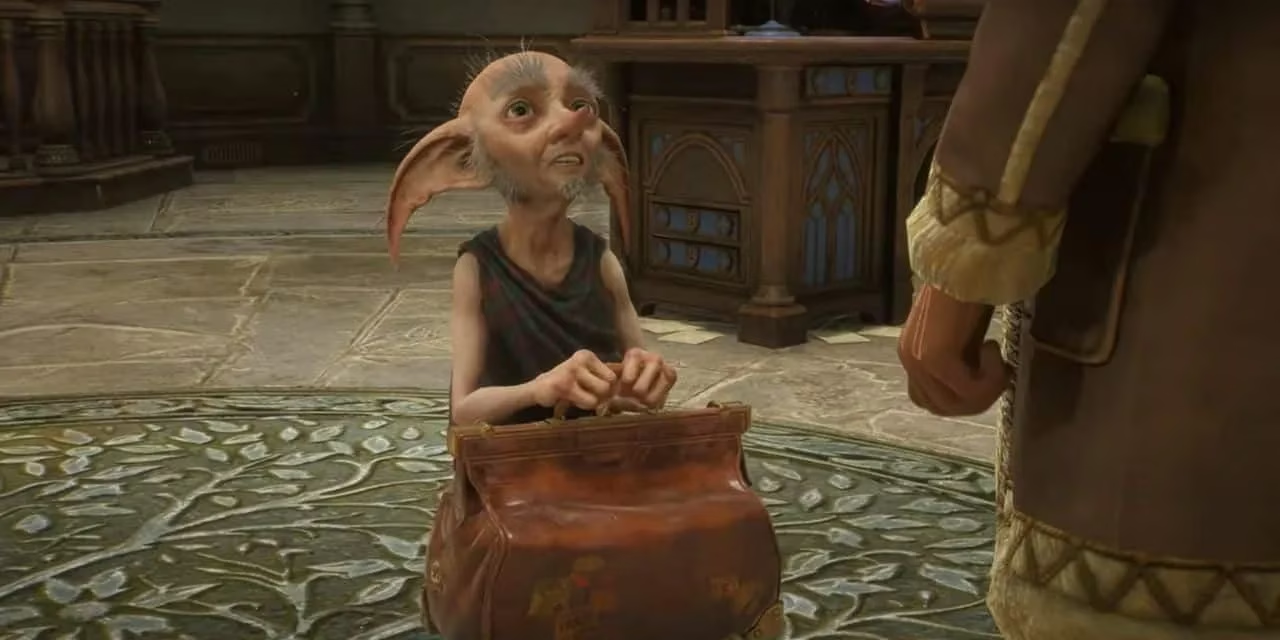
Fantasy's great gift is the non-human, and Hogwarts Legacy treats its magical creatures not as decoration but as a living library of societal commentary. House-elves like the ever-charming Deek scuttle through quests with an uncomfortable truth strapped to their backs—sentient beings reduced to slavery, yet whose loyalty often outshines their masters' morality. The centaurs of the Forbidden Forest stare at wand-wielders with the weary arrogance of a civilization that read the stars long before humans invented the telescope. This isn't the shallow tokenism of a studio patting itself on the back for including a mermaid because marketing demanded it. Instead, the game weaves these threads into a massive tapestry, each creature’s place in the hierarchy revealing a jagged edge in the Wizarding World’s pristine fabric.
Fresh Faces, No Baggage Included
The most thankless tightrope a developer can walk in the 2020s is the one between honoring beloved lore and answering the modern call for representation. Too often, studios fall and break their necks on the sharp rocks of fandom outrage by race-swapping or gender-flipping established characters, a move that feels about as elegant as grafting a centaur's torso onto a Flobberworm. Hogwarts Legacy, blessed with a completely new story set a century before Harry’s birth, pulls off a vanishing act that makes the controversy disappear entirely. Amit Thakkar, the ever-enthusiastic Ravenclaw, didn't replace anyone; he simply showed up with his star charts and his undiluted nerdiness. Poppy Sweeting, the gentle heart with a dragon-sized secret, never stood on the shoulders of Hermione. By crafting original characters, Avalanche avoided the outrage of purists and the insult of tokenism simultaneously—a win so clean it should be studied in game design textbooks for the next decade.
The Storyline That Gave Representation Real Teeth
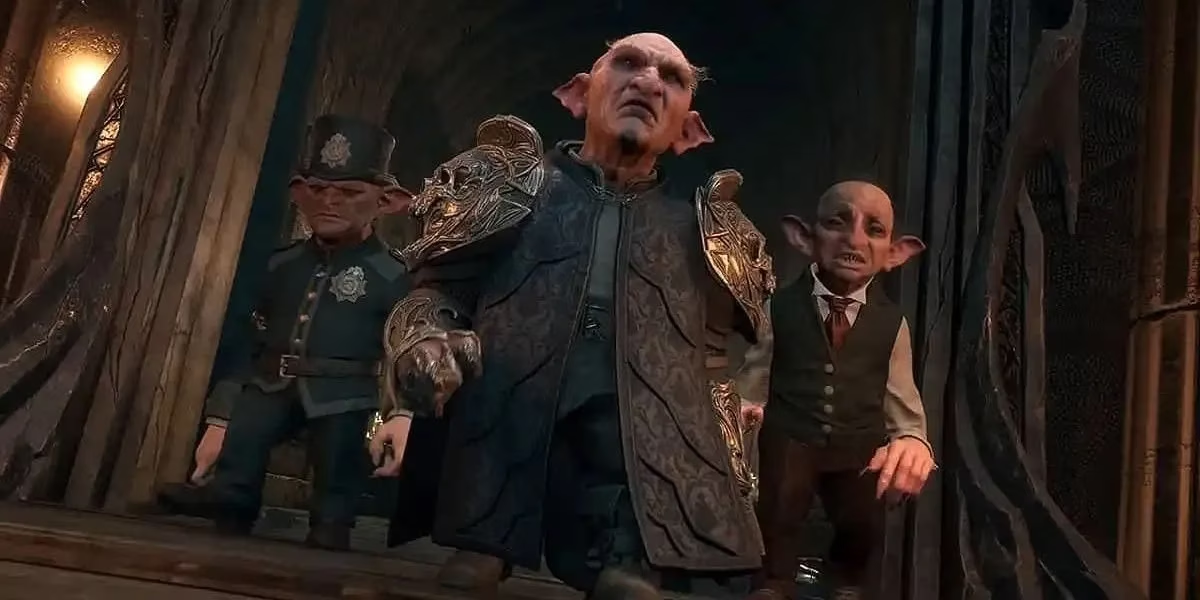
Beneath the Hogwarts Legacy adventure hums a narrative engine that dares to ask the uncomfortable question: what if the monsters are right? Ranrok’s goblin rebellion isn't a cartoonish cry for world domination until the third act forces it into one; for most of the game, it simmers with the legitimate fury of a second-class species that has been denied basic dignity for centuries. Wizards treat even the most eloquent goblin like a talking tool, and house-elves scrub floors in a state of happy servitude that feels decidedly less happy the longer you think about it. The plot channels the same social undercurrents that made The Witcher's Scoia'tael or X-Men's mutants resonate so deeply, becoming a mirror held up to humanity's cozy habit of othering anything unfamiliar. The shame is that the final act ties these threads into a neat, sanitized bow, transforming Ranrok into a screaming cartoon antagonist rather than letting the moral ambiguity fester. Yet, the fact that the game even lit that fuse—and did so without shattering the franchise’s whimsical charm—is a triumph. It injected the pure-blood themes of Voldemort’s era with a centuries-old origin story, proving that representation, when woven into the very DNA of a conflict, doesn’t weaken a beloved property. It gives it a spine.