 HogwartsLegacyZone
The Hogwarts Legacy house-elf dilemma and moral choices present an illusion of consequence, as the pivotal decision regarding Penny's freedom yields only cosmetic changes, highlighting the game's focus on narrative flavor over impactful role-playing mechanics.
In the sprawling magical world of Hogwarts Legacy, players often encounter decisions that feel monumental, steeped in moral weight and narrative consequence. One such moment arrives at the climax of the PlayStation-exclusive quest, "Minding Your Own Business," where, after surviving the psychological maze crafted by the poltergeist Fastidio, the protagonist holds the fate of a house-elf named Penny in their hands. The choice seems stark: grant Penny her long-awaited freedom or ask her to stay and manage the newly acquired shop in Hogsmeade. This dilemma, wrapped in the dark, horror-esque tones of the quest, presents what appears to be a profound ethical crossroads in the wizarding world of the 1890s.
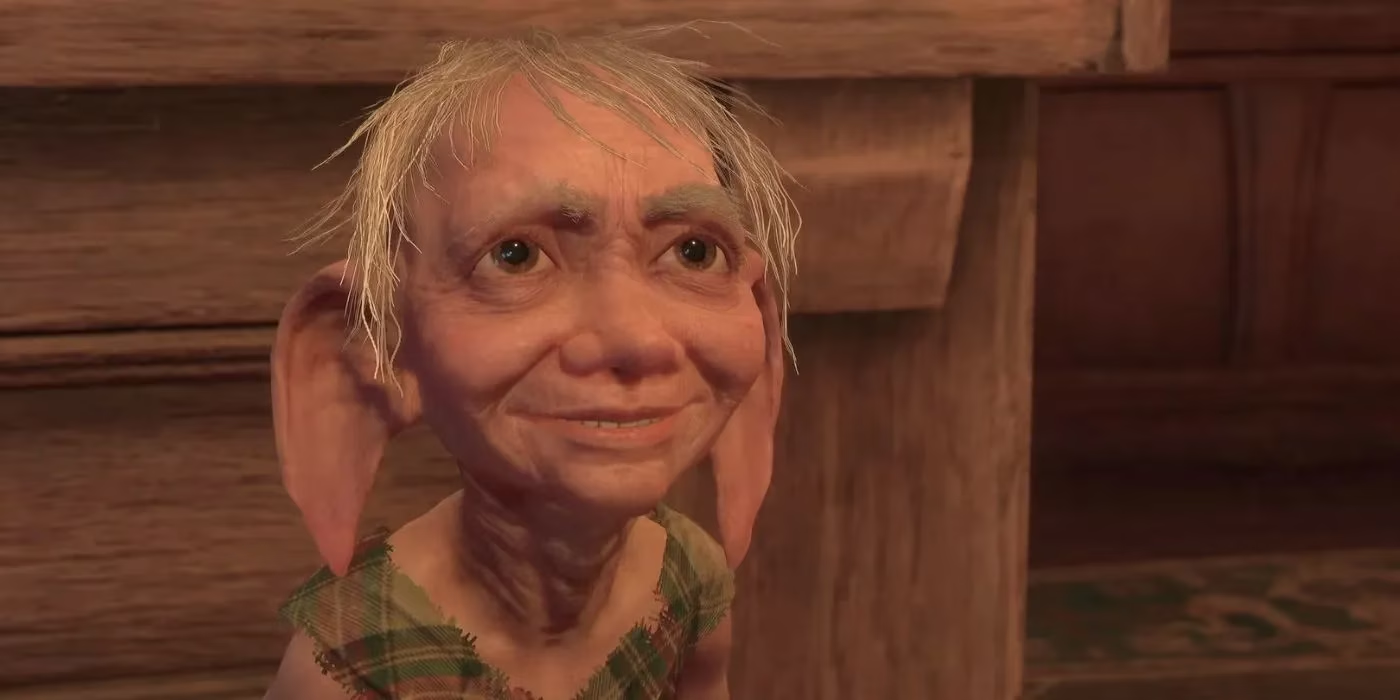
Surprisingly, the much-anticipated decision carries little practical weight within the game's mechanics. Whether a player chooses the dialogue option to free Penny or to request her assistance, the outcome is virtually identical. Upon receiving the floppy straw hat from Fastidio's dungeon—a symbol of her liberation—Penny expresses immense joy at becoming a free elf. However, she immediately reveals that her lifelong dream is to run a store with a friend and serve the residents of Hogsmeade. Consequently, she insists on staying to help the protagonist manage the shop regardless of the initial choice made. This renders the decision largely inconsequential from a gameplay perspective, serving more as a narrative flavor than a branching path.
The quest highlights a broader theme within Hogwarts Legacy: the illusion of choice. Throughout their journey, witches and wizards face numerous moral dilemmas, yet very few have lasting impacts on the game world. The choice concerning Penny is a prime example. Beyond slightly different cutscene dialogue, the only tangible difference is cosmetic; if freed, Penny will wear her hat from that point onward. The shop's operations, profits, and interactions remain unchanged. This design approach can be disappointing for players seeking deep role-playing consequences, as it diminishes the perceived significance of their actions.
🔍 Key Choices That Actually Matter in Hogwarts Legacy:
While many decisions feel significant, only a handful truly alter the player's experience:
-
The Final Repository: This choice directly determines which ending cinematic the player sees.
-
House Selection: Picking Gryffindor, Hufflepuff, Ravenclaw, or Slytherin affects early-game quests and aesthetic.
-
Sebastian Sallow's Fate: Deciding whether to turn Sebastian in or not during his questline has narrative repercussions.
-
Using Unforgivable Curses: While not leading to arrest or Azkaban, using curses like Avada Kedavra influences companion reactions and dialogue.
This short list underscores that most decisions, including Penny's fate, are designed for role-playing immersion rather than systemic consequence. The lack of a formal morality system means players are often navigating an illusion of agency, where the emotional weight of a choice isn't matched by its gameplay impact.
From a role-playing perspective, however, the decision to free Penny holds symbolic value. Set in the 1890s, long before Hermione Granger's Society for the Promotion of Elfish Welfare (SPEW), the game offers little overt commentary on elf welfare. Therefore, a player's choice becomes a personal statement. For a character aligned with "good" morals, freeing an elf from magical bondage is the ethically clear path, an act of kindness in a world where such considerations are rare. It allows players to define their witch or wizard's principles, even if the game world doesn't overtly acknowledge them.
Ultimately, the choice concerning Penny boils down to personal preference and character portrayal. Does your student believe in absolute freedom for all magical beings, or do they see a mutually beneficial arrangement in Penny managing the shop? The game refuses to penalize or reward either path, leaving the moral calculus entirely to the player. This can be a clever narrative trick, making players reflect on their motives without the pressure of in-game punishment. Yet, it also reinforces a common critique of Hogwarts Legacy: that its vast, beautiful world is sometimes lacking in meaningful interactive depth.
The "Minding Your Own Business" quest, with its spooky challenges and climatic decision, encapsulates the game's approach to player agency. It provides a compelling story beat and a moment of ethical reflection, but it carefully funnels players back to a shared outcome. For some, this realization might break immersion; for others, it liberates them to choose based purely on story and character without fear of missing out on content. As of 2026, with the game having been experienced by millions, the conversation around Penny serves as a lasting example of how modern RPGs balance narrative choice with streamlined design—sometimes prioritizing the feeling of consequence over its actual implementation.
In the end, whether Penny wears her hat as a free elf or a willing shopkeeper, her story in Hogsmeade continues unchanged beside the player. The real magic of the choice lies not in altering the game, but in the story players tell themselves about the kind of witch or wizard they chose to be.