 HogwartsLegacyZone
Hogwarts Legacy and Hogwarts Legacy 2 captivate with immersive magic, but the sequel faces challenges in evolving the iconic castle setting.
The wizarding world breathed a collective sigh of wonder when Hogwarts Legacy landed in 2023, shattering sales records and reminding everyone that the thirst for a truly immersive Harry Potter experience was far from quenched. It wasn't just any game; it was the first title in over a decade to dethrone the usual Call of Duty and Rockstar juggernauts from the top of the yearly charts. With numbers like that, a sequel isn't a question of if, but when. And yet, the very soul of that success—the sprawling, secret-laden Hogwarts Castle—now presents the most delicate puzzle for developer Avalanche Software.
The castle in the 2023 game wasn't merely a backdrop; it was a living, breathing character with a mischievous personality. It hummed with centuries of whispered spells, creaked with shifting staircases that seemed to possess their own whims, and hid frescoes that giggled at private jokes no player could fully understand. Spending hours wandering its halls felt like getting to know an eccentric old friend. You couldn’t just pop in for a quick butterbeer and leave—the place had a way of pulling you deeper into its stories. This intricate design became the crown jewel, so detailed and central that abandoning it for a sequel feels like trying to write a sequel to a beloved book but leaving the titular character on a bus to nowhere.
A Hogwarts Legacy 2 faces an identity crisis rooted in its own title. The name brilliantly anchored the first game, putting the school front and center. For consistency, and to avoid confusing the massive audience that fell in love with that branding, a follow-up would logically be called something similar—Hogwarts Legacy: Something, or perhaps just a numbered sequel. But here comes the rub: if the name keeps \u201cHogwarts,\u201d the castle must return as the star. If the story ventures elsewhere, say to the alleys of London, the forests of Albania, or an entirely new wizarding school, the title suddenly becomes a misnomer. It\u2019s the same narrative trap Rocksteady stumbled into with 2015\u2019s Batman: Arkham Knight. The series started in the tight corridors of Arkham Asylum, expanded to a walled-off city district in Arkham City, and then awkwardly had to justify the \u201cArkham\u201d branding while giving players the entirety of Gotham. A title becomes a promise, and breaking it can feel like a betrayal before the game even boots up.
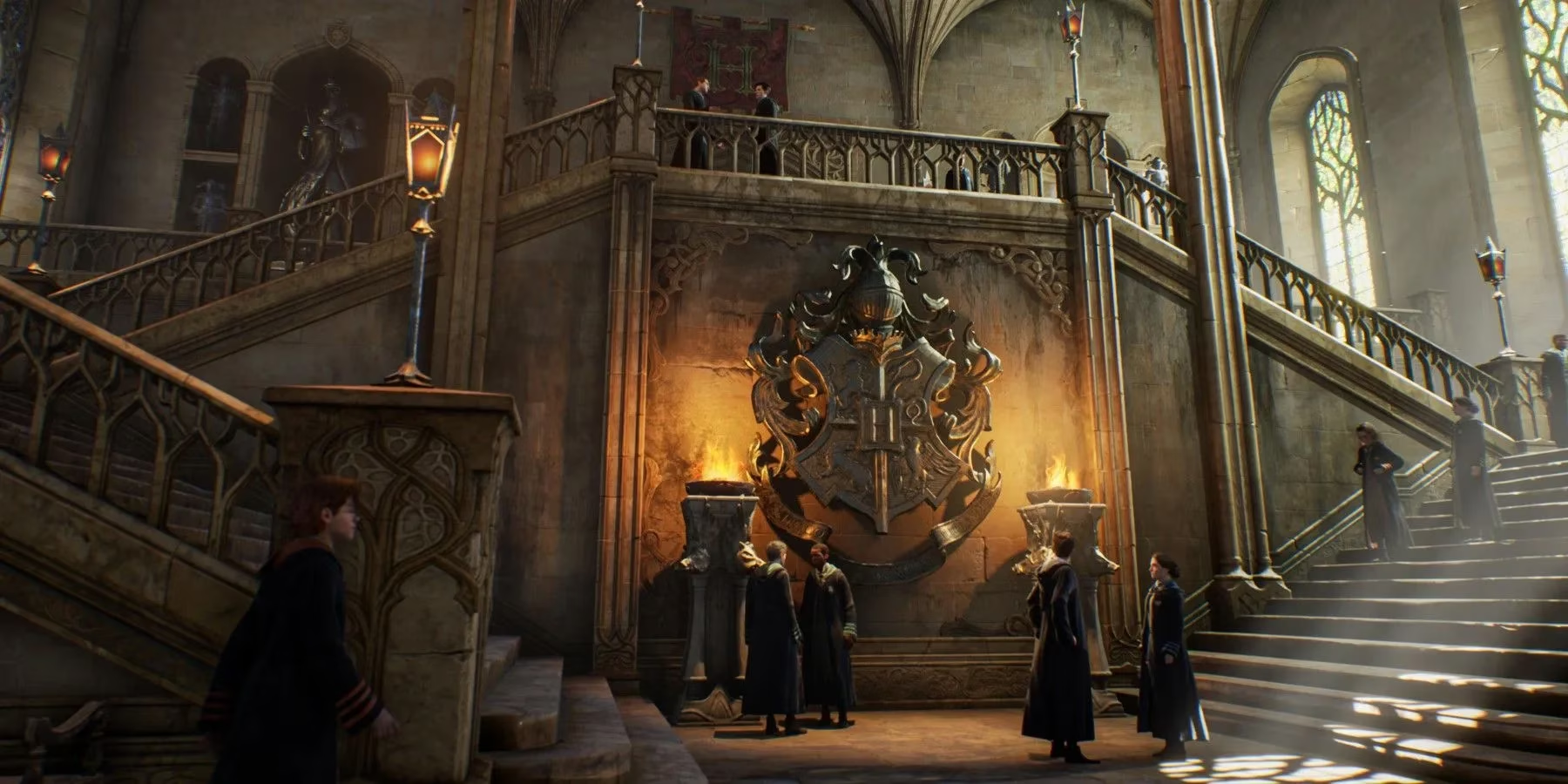
Still, the school posed a huge creative challenge. Its adaptation was magnificent: every corridor whispered callbacks to Potter lore, every moving portrait felt distinct, and students bustled about with schedules that seemed almost real. The problem is, Hogwarts is also a museum piece, its layout sanctioned by decades of established canon. Avalanche can\u2019t just slap a new common room onto the side or discover a thirteenth-century wing hidden beneath the greenhouses without shredding narrative logic. Using the exact same map, however, would sap the sequel of novelty, making the old friend feel like a tired rerun. The thing is, you can\u2019t just wave a wand and make a thousand-year-old castle fresh again without it feeling like a cheap trick. That delicate balance between reverence and reinvention is a cursed vault no developer has ever fully cracked.
Yet, the wider wizarding world beckons with the promise of uncharted territories. Imagine a story set in the depths of the Forbidden Forest where ancient centaur magics twist reality, or a journey through the marble halls of Beauxbatons, glittering under a summer sky. The temptation to push the map beyond the Highlands must be immense. But removing Hogwarts entirely risks hollowing out the series\u2019 soul. The castle was the emotional heartbeat, the place players returned to for comfort between adventures, for roasting flobberworms in potions class, or for simply watching the seasons change across the stone parapets. Take that away, and the sequel loses the hygge that made the original more than just an action RPG.
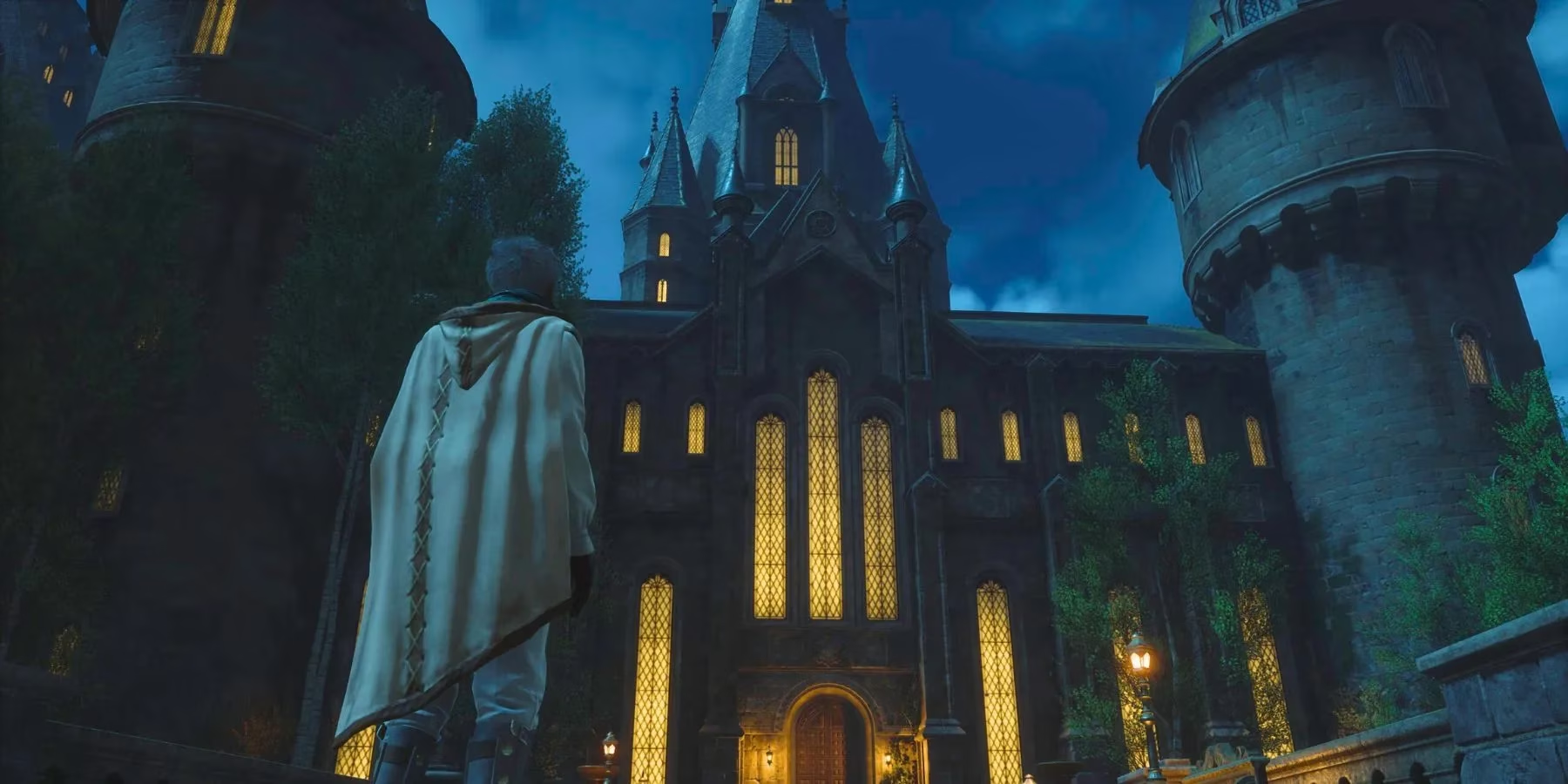
In 2026, the rumor mill churns daily with whispers of a sequel that might finally move the timeline forward, perhaps even brushing against the era of Tom Riddle. That would give the castle a different, darker flavor without physically altering its bones—a clever spiritual refresh. By playing with time, Avalanche could keep the beloved setting while rolling out new secrets: different passwords for common rooms, shifting dynamics in the Slytherin dungeons, or ghosts reacting to a world on the brink of war. It\u2019s a way to let the castle grow up alongside its audience, showing a new side of its personality without abandoning its essence.
The choice remains a deliciously difficult one. The castle is a character that demands the spotlight, but the franchise needs room to stretch its wings. Whatever path the sequel takes, one truth holds firm: the magic of Hogwarts is not easily bottled, and escaping its gravitational pull might be the bravest—and riskiest—spell Avalanche could ever cast. 🏰✨
For now, the developers sit in that liminal space between honoring a landmark and breaking free from it, and the wizarding world holds its breath.