 HogwartsLegacyZone
Hogwarts Legacy 2 speculation ignites as fans debate Sebastian Sallow's fate, exploring his complex, morally charged journey in the wizarding world.
Hey fellow witches and wizards! As we eagerly await news about Hogwarts Legacy 2 in 2026, one question keeps popping up in my mind and, I'm sure, in many of yours: What will happen to Sebastian Sallow? That complex, morally gray Slytherin student from our first journey left us with a story that felt unfinished, a narrative thread dangling with so much potential. Looking back at the original game, his quest to heal his sister, Anne, using any means necessary—including the Dark Arts—was one of the most compelling and emotionally charged arcs. It wasn't just a side story; it was central to how we, as the player, learned about the darker corners of the wizarding world and even mastered some of its most forbidden spells. Now, with a sequel on the horizon, the developers at Avalanche Software face a real conundrum. Should Sebastian return, or should his tale be left in the past? Let's dive into the arguments swirling around this captivating character.
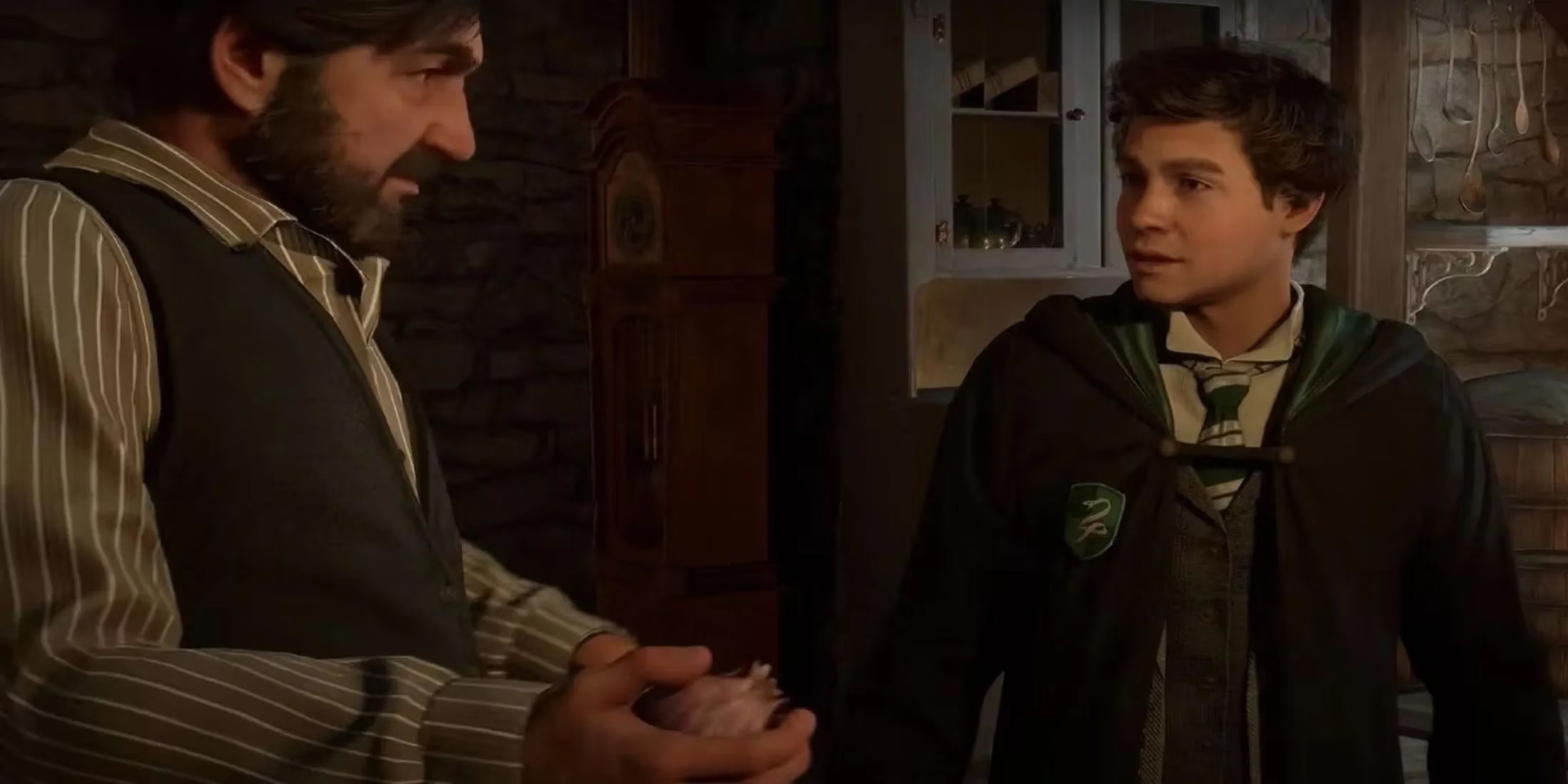
The Case for Leaving Sebastian Behind: A Closed Chapter
First, let's consider the reasons why his story might be conclusively over. From a narrative standpoint, Sebastian's personal journey reached a powerful, albeit tragic, culmination. His desperate actions led to the ultimate transgression: using an Unforgivable Curse to murder his own uncle, Solomon. This is a monumental event in the Harry Potter universe, where the use of such magic carries severe, lifelong consequences. The game gave us a choice in his fate—to turn him in or protect him—but morally, the act itself is a point of no return.
🧠 Moral Consequence & Narrative Closure:
The Harry Potter series has always been rooted in themes of light overcoming darkness and accountability for one's actions. Having Sebastian face the ultimate punishment—whether that's expulsion from Hogwarts or, more fittingly, a sentence in the dreaded wizarding prison, Azkaban—would align perfectly with these core tenets. It would provide a clear, definitive end to his arc, teaching a powerful lesson about the cost of pursuing power without regard for morality. Bringing him back might undermine the gravity of his crimes and the weight of our original choice.
⚖️ Correcting a Perceived Flaw:
One common critique of the first Hogwarts Legacy was its somewhat lenient treatment of the Dark Arts. We could learn and use the Unforgivable Curses with relatively little narrative repercussion. Sebastian's uncle, Solomon, was one of the few characters who showed a truly visceral, horrified reaction to their use. By having Sebastian definitively pay for his dabblings in dark magic, the sequel could address this criticism head-on, reinforcing that these spells are called "Unforgivable" for a reason. It would be a bold statement that the sequel is taking a firmer ethical stand.
The Case for Bringing Sebastian Back: An Unfinished Symphony
On the other hand, the arguments for his return are incredibly strong, centered on his deep connection to our protagonist and his untapped potential for future storytelling.
🤝 An Inseparable Bond:
Sebastian wasn't just another classmate; he was our guide and confidant. Think about it:
-
He introduced us to the Battle Arenas, sharpening our combat skills.
-
He was our conduit to learning the Unforgivable Curses—Crucio, Imperio, and the fateful Avada Kedavra.
-
He shared his deepest fears and motivations with us, creating a bond that felt genuine. To simply write off such a pivotal figure would feel like a disservice to the relationships we built in the first game. Whether he's a friend we protected or a criminal we reported, his absence would leave a noticeable void.
😈 A Villain in the Making:
This is, for me, the most exciting possibility. Sebastian's character arc is a classic recipe for a compelling antagonist. He has already demonstrated a "the ends justify the means" philosophy, a trait he shares with some of the wizarding world's most infamous dark wizards. Even in his moments of remorse over killing Solomon, he never expressed regret for the path he took—only its most extreme outcome.
| Sebastian's Traits | Potential Villainous Path |
|---|---|
| Obsessive devotion to a goal (healing Anne) | Could shift to a grand, twisted ambition for power or "fixing" the wizarding world. |
| Willingness to use forbidden magic | Mastery of Dark Arts could grow exponentially in the years between games. |
| Intelligence and charisma | Ability to attract followers or operate from the shadows. |
| Personal tragedy and sense of injustice | Fuel for a vengeful or revolutionary ideology. |
The path to him becoming a 19th-century precursor to a Voldemort-like figure is almost linear. The franchise thrives on memorable antagonists, and Sebastian has all the makings of one—a villain whose descent into darkness we witnessed firsthand, making his potential reign of terror all the more tragic and personal.
Weighing the Possibilities: What Could His Role Be?
If he returns, it likely won't be as the carefree student we once knew. His role would have to reflect the consequences of his past. Here are a few scenarios that could play out:
-
The Azkaban Inmate: We might only interact with him through occasional, somber letters or a single, powerful visit to the prison. He could serve as a cryptic source of information or a warning from the past.
-
The Fugitive Dark Wizard: Perhaps he never faced official justice. He could be operating in the shadows, and our paths cross as we investigate a new threat—one he might be leading or be intimately connected to.
-
The Reluctant Ally: In a scenario where a greater evil emerges (perhaps connected to the ancient magic or the goblin rebellion's aftermath), we might be forced to seek out the one person who understands forbidden magic as well as we do: Sebastian. An uneasy alliance with a former friend-turned-outlaw would create fantastic dramatic tension.
Ultimately, the decision rests with the storytellers at Avalanche. Do they close the book on Sebastian Sallow to uphold the moral framework of the universe? Or do they embrace the rich, complicated narrative potential his character represents? For a sequel to truly build upon the foundations of the first game, engaging with its most morally complex character seems not just logical, but necessary. His story feels too potent, too intertwined with our own journey, to be left as a mere footnote. Whether as a cautionary tale from a prison cell or a dark shadow looming over a new adventure, Sebastian Sallow's chapter in the Hogwarts Legacy saga shouldn't be over. The wizarding world is richer for characters who live in the gray areas, and his return could make Hogwarts Legacy 2 an even more profound and unforgettable experience.