 HogwartsLegacyZone
Discover Isidora Morganach in Hogwarts Legacy, a nuanced antagonist whose Ancient Magic sets her apart from Grindelwald and Voldemort.
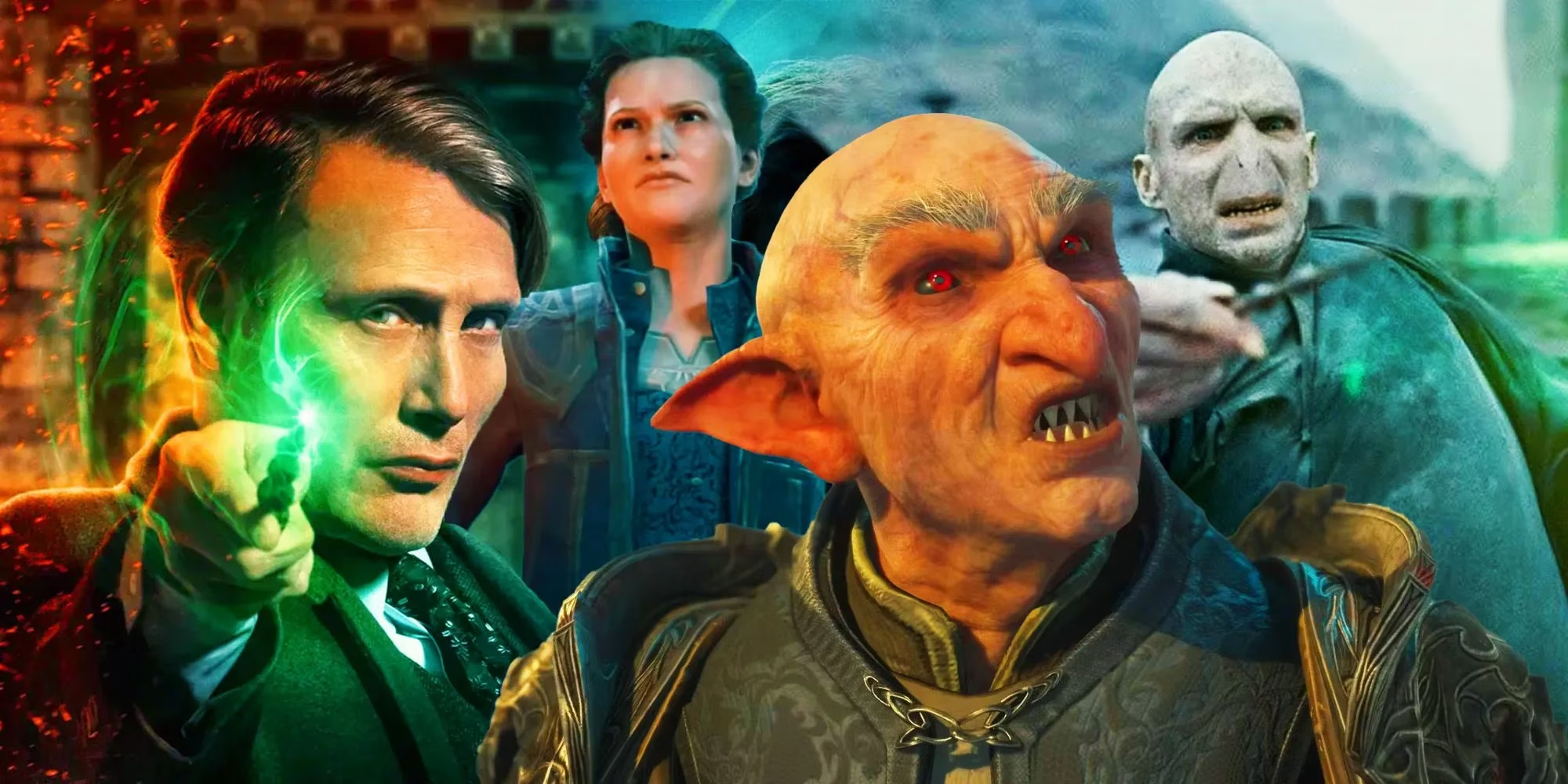
Hey there, fellow witch or wizard! Let's talk about something that's been on my mind since I finished Hogwarts Legacy a while back. You know, when you really dig into the story, the main antagonist, Isidora Morganach, isn't your typical 'bwahaha, I'm evil' kind of villain. It's kind of... refreshing, honestly. The game throws you, a fifth-year student, into this mystery, and you slowly piece together her story through trials set by former headmasters and professors. But here's the thing that got me thinking—compared to the dark wizards we all know and fear from the main Harry Potter series, Isidora is in a league of her own. She lived centuries before Voldemort or Grindelwald were even born, and her whole deal with Ancient Magic... well, it makes you wonder, doesn't it? Was she truly evil, or just someone who took a good idea way, way too far?
She Had Good Intentions, But... Oh Boy, The Consequences!
Let's get this straight from the start. Isidora wasn't trying to rule the world or become immortal. Nope. She genuinely wanted to help people. Can you believe it? Her whole mission was to use her unique ability to manipulate Ancient Magic to take away emotional pain from others. I mean, who hasn't wished they could just magically remove sadness or grief? It sounds almost... noble, right? Compared to villains like Grindelwald, who wanted power, or Voldemort, who wanted to purge Muggle-borns, her goal seems almost saintly.
But here's where it all goes pear-shaped. She stored all that pain she removed in these magical repositories. And, oh man, talk about a bad idea. It's like she created emotional nuclear waste without a proper disposal plan. These repositories turned into incredibly dangerous weapons. Even worse, if she used her 'pain removal' spell on someone too many times, it would hollow them out, leaving them as an empty shell. So, her good intentions? They paved a pretty nasty road to a magical disaster. It's a classic case of the road to hell being paved with good intentions, if you ask me.
Grindelwald: The Revolutionary Who Craved Power
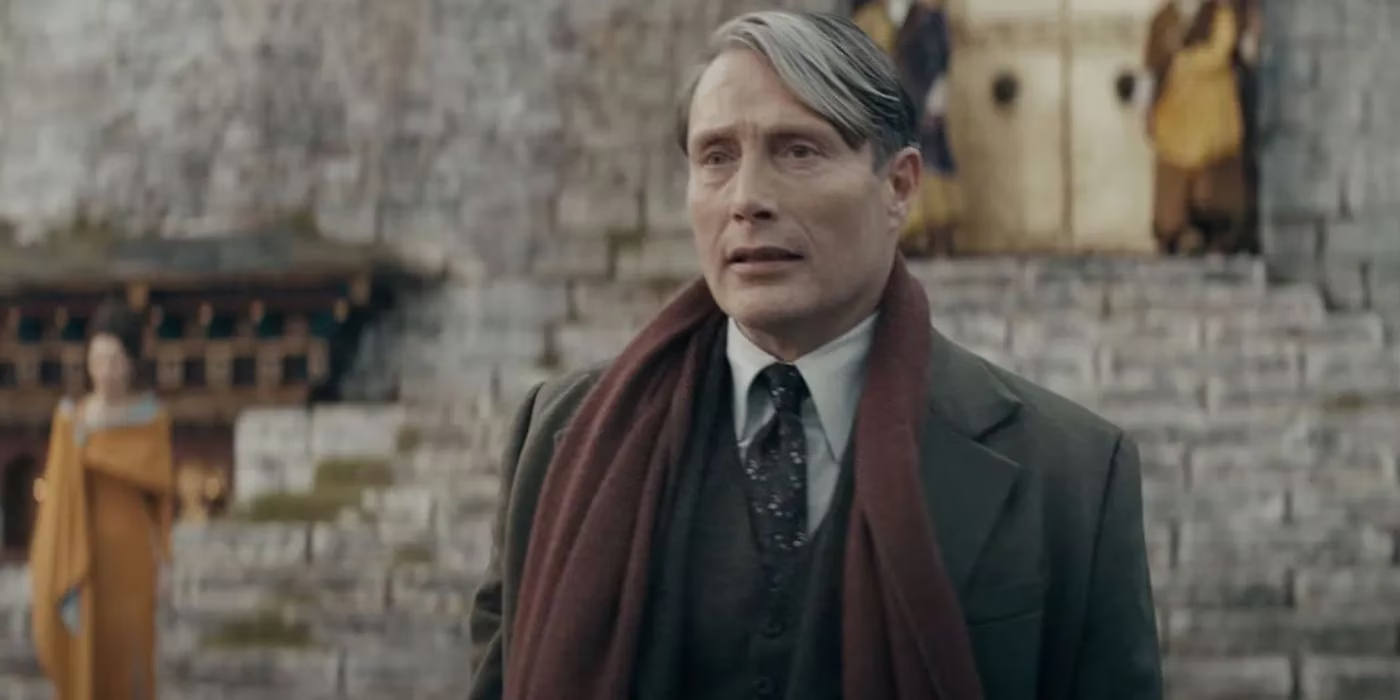
Now, let's shift gears to Gellert Grindelwald. This guy is on a whole other level. Isidora had Ancient Magic; Grindelwald had raw ambition and a vision. He didn't go to Hogwarts—he was a Durmstrang man, a school that was, let's say, more open to the Dark Arts. And get this: he was even expelled from Durmstrang for performing terrifying Dark Arts experiments. If a school known for dark magic kicks you out, you know you've crossed a line!
As a Seer, he had a vision of himself dominating the wizarding world, and he became obsessed. His big goal? To overthrow the International Statute of Wizarding Secrecy. He wanted wizards to come out of hiding and rule over Muggles. He even teamed up with a young Dumbledore for a while, though their reasons were totally different—Dumbledore wanted to protect people, Grindelwald wanted power. His revolution turned bloody, with mass murders so large they even alerted the Muggle world, coinciding with the chaos of the Second World War. He was eventually stopped by Dumbledore, but his legacy of violence is undeniable.
Voldemort: The Pinnacle of Evil, No Question
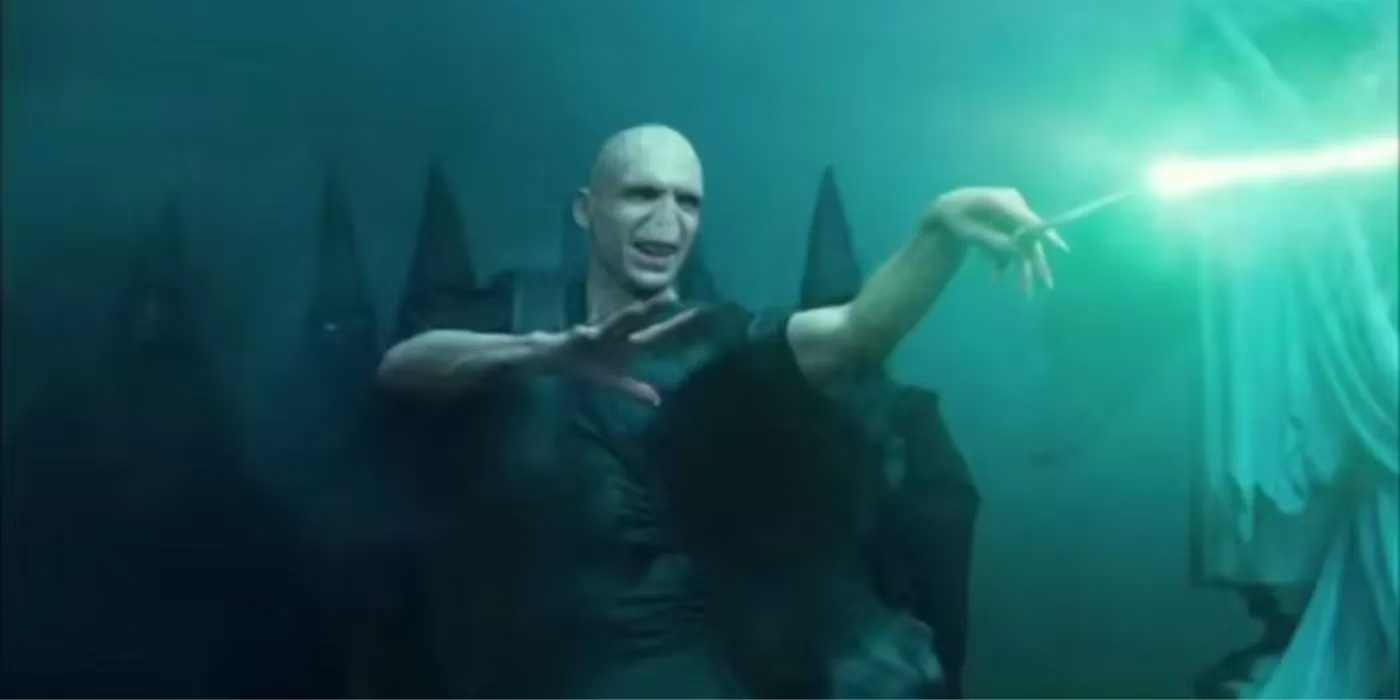
And then... there's He-Who-Must-Not-Be-Named. Tom Riddle. Lord Voldemort. From the moment he was a child in that Muggle orphanage, he showed a chilling callousness and disregard for life. Learning he was a wizard only fueled his hatred, especially for his Muggle father. His obsessions were clear from the start:
-
Immortality: He went to horrific lengths, creating multiple Horcruxes by committing murder.
-
Pure-blood Supremacy: He wanted to purge the wizarding world of those he deemed 'unworthy.'
-
Absolute Power: He started two Wizarding Wars, killing indiscriminately.
What sets Voldemort apart, and makes him the worst of the worst, is the sheer pointlessness of his cruelty. He killed for sport, for convenience, or just to make a point. He is widely considered the most evil wizard in centuries because he showed zero remorse, zero love, and zero goal beyond his own domination. He didn't want to help anyone, not even himself in a healthy way—he just wanted to inflict his will on the world. Even Grindelwald showed some regret in his old age. Voldemort? Never.
So, Where Does That Leave Isidora?
Let's put them side-by-side, shall we?
| Villain | Primary Motivation | Method | Body Count & Impact | Remorse? |
|---|---|---|---|---|
| Isidora Morganach | To eliminate emotional pain | Ancient Magic, creating repositories | Indirect, created dangerous magical weapons, emotionally scarred victims | Unclear, but likely didn't foresee the full harm |
| Gellert Grindelwald | Wizard supremacy & power | Dark Arts, revolution, mass murder | High, instigated a global wizarding war | Showed some in later imprisonment |
| Lord Voldemort | Immortality, pure-blood rule, terror | Unforgivable Curses, Horcruxes, terrorism | Extremely high, two major wars, countless murders | Absolutely none |
Looking at this, it's pretty clear, isn't it? Isidora's story is a tragedy. She's a cautionary tale about unintended consequences. She wasn't cackling in a tower; she was probably convinced she was doing the right thing until the very end. Her power corrupted her goal, but the core desire wasn't born from malice.
Grindelwald was an ideologue turned warlord, believing his cruel path was for a 'greater good' that only benefited people like him.
Voldemort? He's just a straight-up monster. A psychopath with a wand.

Wrapping It Up: Nuance in a Black-and-White World
So, after all this, calling Isidora 'evil' feels... too simple. The Harry Potter universe has given us a spectrum:
-
The Well-Intentioned Extremist (Isidora): Wanted to cure pain, ended up creating a worse disease.
-
The Dangerous Revolutionary (Grindelwald): Wanted to change the world order, but through fear and bloodshed.
-
The Pure Embodiment of Evil (Voldemort): Wanted to burn the world down just to feel its warmth.
Hogwarts Legacy gave us a villain with depth, someone whose story makes you think long after the credits roll. It asks a tough question: Can a good heart, paired with immense power and a lack of foresight, create just as much damage as a truly wicked one? In the end, Isidora's legacy is one of dangerous magic and broken lives, but her name doesn't belong on the same list as the Dark Lords who sought to drown the world in darkness for the sake of darkness itself. She's a reminder that in magic, as in life, the path matters just as much as the destination.
What do you think? Was Isidora a villain, or just a tragic hero who lost her way? Sometimes, the most interesting characters are the ones that live in the gray areas. Makes you wonder what other stories are hidden in the ancient halls of Hogwarts, doesn't it?