 HogwartsLegacyZone
Warner Bros.' Nemesis System could turn Hogwarts Legacy 2's House Points and Quidditch into dynamic hierarchies without violence
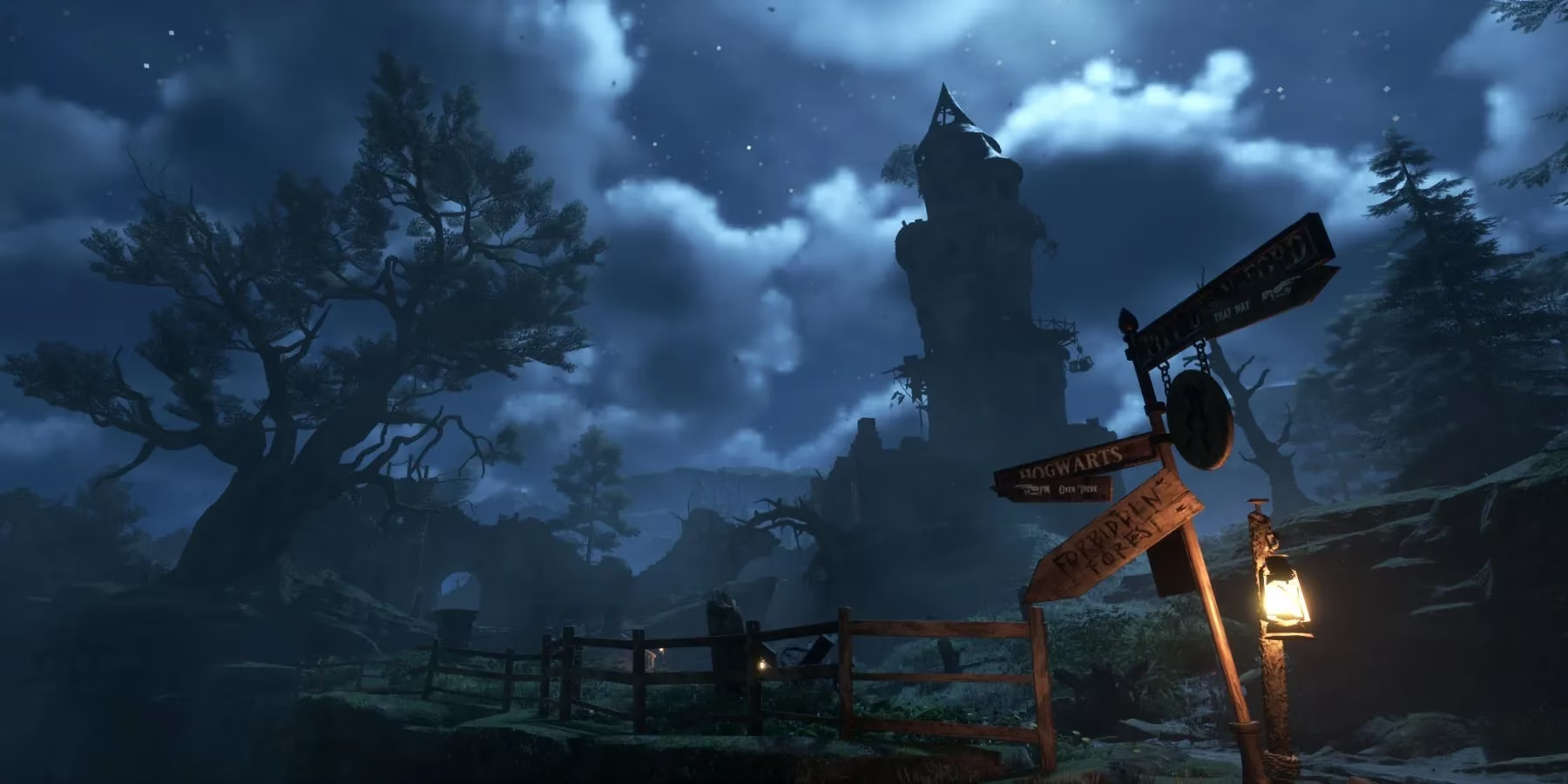
The Nemesis System—Warner Bros.' patented dynamic hierarchy engine—made waves in the Middle-earth games, creating personal vendettas and emergent storytelling that still haunt players years later. After a long silence, whispers confirmed it was being woven into Monolith's upcoming Wonder Woman title. Now that we're in 2026, with that game either freshly launched or on the horizon, the community is asking a tantalizing question: what if this system found its way into Hogwarts Legacy 2? After all, Avalanche Software's enchanted sequel is deep in development, and with the Nemesis System back in the spotlight, the possibility feels less like a fantasy and more like a logical next step.
But how would a mechanic built around killing, betraying, and usurping orc captains ever fit into a story about teenage witches and wizards? That's the million-Galleon question. The original Nemesis flowchart of enemies being promoted, demoted, or permanently executed worked brilliantly because death was always on the table. In a school setting, you can't exactly Avada Kedavra your way through the Slytherin Quidditch team and watch the benchwarmers climb the ranks. The first Hogwarts Legacy already caught heat for letting players cast Unforgivable Curses without real consequences—imagine the backlash if you could eliminate students to reshape a social ladder. Clearly, a direct transplant would be a disaster.
Yet the core idea—a living, reactive network of characters with shifting relationships—has enormous potential. So, how could Avalanche adapt it? The most elegant solution is already staring us in the face: the House Points system. Every Hogwarts student lives and breathes the competition for the House Cup, and a Nemesis-style ledger could display which houses are pulling ahead, which are faltering, and—most importantly—who the key players are. Picture a menu that updates in real time: a Hufflepuff prefect losing points after a detention, that same prefect then being "demoted" in the house's internal standing, or a Slytherin rival earning a sudden promotion because they successfully sabotaged your potions assignment. None of this involves violence; it simply tracks reputation, achievements, and misdeeds. Would that keep everyone engaged? Possibly not, but for anyone who remembers the thrill of watching that hourglass fill at the final feast, it could breathe new life into the day-to-day school experience.
Another avenue—and this one gets truly exciting—is Quidditch. We know fans are begging for a playable Quidditch mode in the sequel, and if Avalanche delivers, a Nemesis-style ranking could turn every match into a saga. Envision a team roster where each NPC chaser, seeker, beater, and keeper has visible stats, strengths, and weaknesses. After a brutal game against Ravenclaw, you might see that their star Keeper is listed as "injured: out 2 matches." Their replacement—an unknown third-year—takes the slot, and suddenly your next face-off looks very different. News spreads through the system: a rival Seeker's dodging ability drops because of a Bludger scare, or a Chaser's confidence stat plummets after a public feud. Would you exploit that to sway your house's chances? The moral dimension alone would be delicious. Of course, this demands that every opponent on the pitch becomes a named, unique character with evolving attributes—an ambitious ask, but exactly the kind of depth the Nemesis philosophy was built for.
Still, critics might raise an eyebrow: isn't this all just glorified stat-tracking? Not really. What made the Nemesis System so unforgettable wasn't the data—it was the stories. The Orc who remembered you throwing him into a fire pit and came back with a metal plate fused to his skull. The grunt who saved your life and was later promoted to bodyguard. Translate that to Hogwarts, and you get a universe where your choices actually change the social fabric. A student you helped in a Herbology side quest might now sit at your table during meals, giving you insider info on her own house's Quidditch tactics. A Gryffindor bully you humiliated in a duel could pop up months later with a vendetta, actively working against your house in the points race. Suddenly, the school feels alive—not through scripted cutscenes, but through systems that remember.
Is this too hopeful? Perhaps. The Nemesis System remains a technical marvel, and Warner Bros. has been notoriously protective of it. But with its return in Wonder Woman, the door is open again. By 2026, game studios are hungrier than ever for features that create true replayability, and Hogwarts Legacy 2 sits on a mountain of expectations following the original's massive success. A House Cup hierarchy that hums with rivalry, a Quidditch circuit that adapts week by week—these aren't just gimmicks. They're ways to make your Hogwarts journey uniquely yours. And honestly, after all these years, isn't that the magic we've all been waiting for?