 HogwartsLegacyZone
Hogwarts Legacy 2 could reduce Floo Flame fast travel points to deepen immersion and encourage more broom exploration.
The wizarding world burst back into life in a big way when Hogwarts Legacy arrived, letting players finally craft their own witch or wizard and roam a beautifully realized open-world. Sales numbers soared, critics nodded appreciatively, and it became clear that the marriage of Harry Potter lore with a sprawling action RPG was something fans had been craving for years. Now, as whispers of a sequel grow louder in 2026, attention turns to what Avalanche Software might refine next time around. Among the many tweaks on the wishlist, one quality-of-life feature stands out as both a blessing and a quiet crutch: the Floo Flame fast travel network.
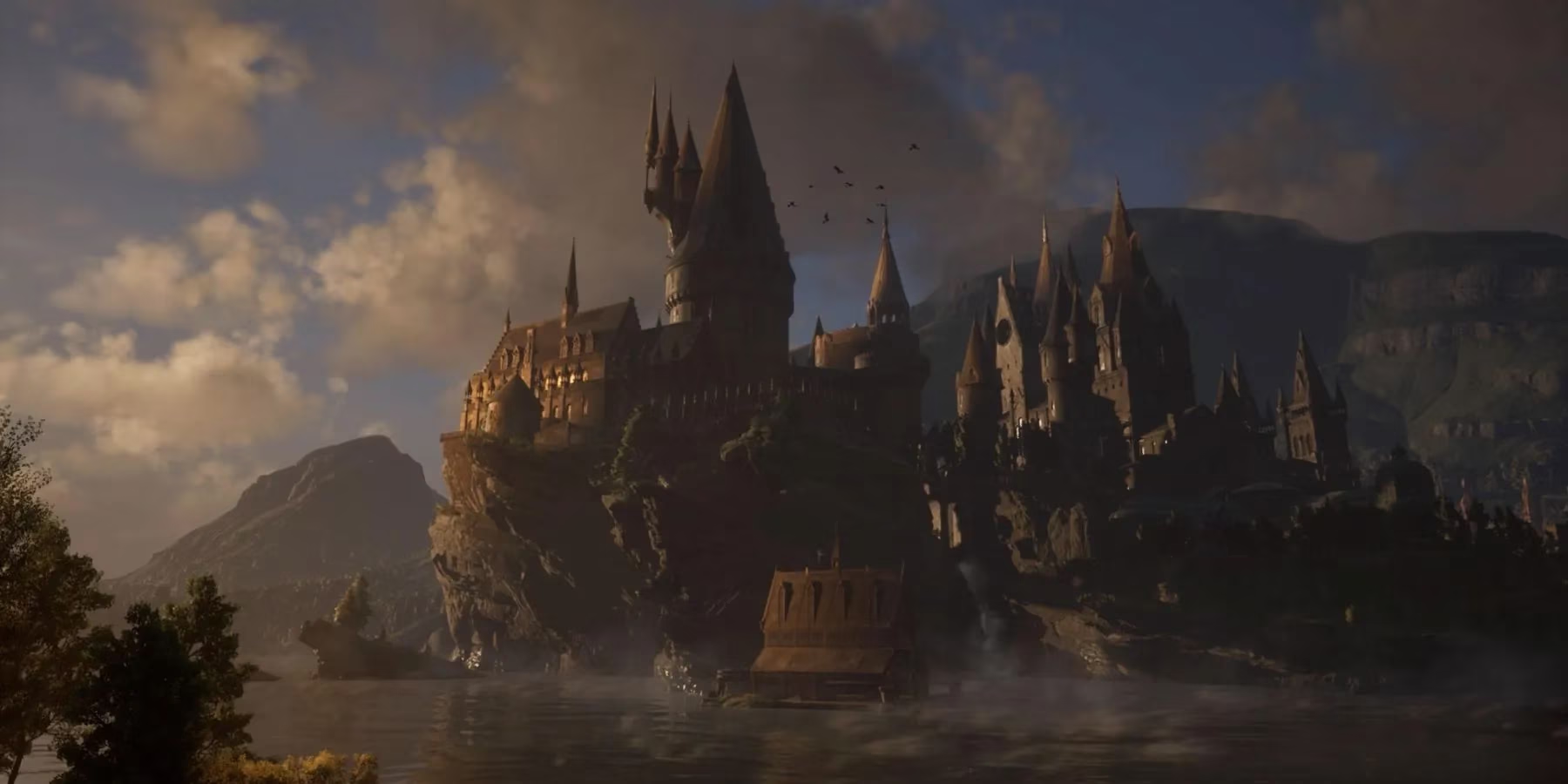
Hogwarts itself is a labyrinth of moving staircases, hidden chambers, and towers that spiral dizzyingly high. Getting around this enchanted fortress without a little magical assistance would be a right pain in the wand. The developers clearly understood this, peppering the map with Floo Flame points like Merlin’s own confetti. And you know what? It works. Players can zip from the astronomy wing to the dungeons in a blink, ignoring the fact that brooms are barred from the castle interior. The convenience is undeniable—maybe a little too undeniable. After all, why bother jogging through the Grand Staircase when a green flame is winking at you from ten feet away? The system, as forgiving as it is, ended up making the journey almost optional. Instead of trekking through corridors that tell their own stories, many simply hopped from point to point, missing out on the ambient magic of the castle’s heartbeat.
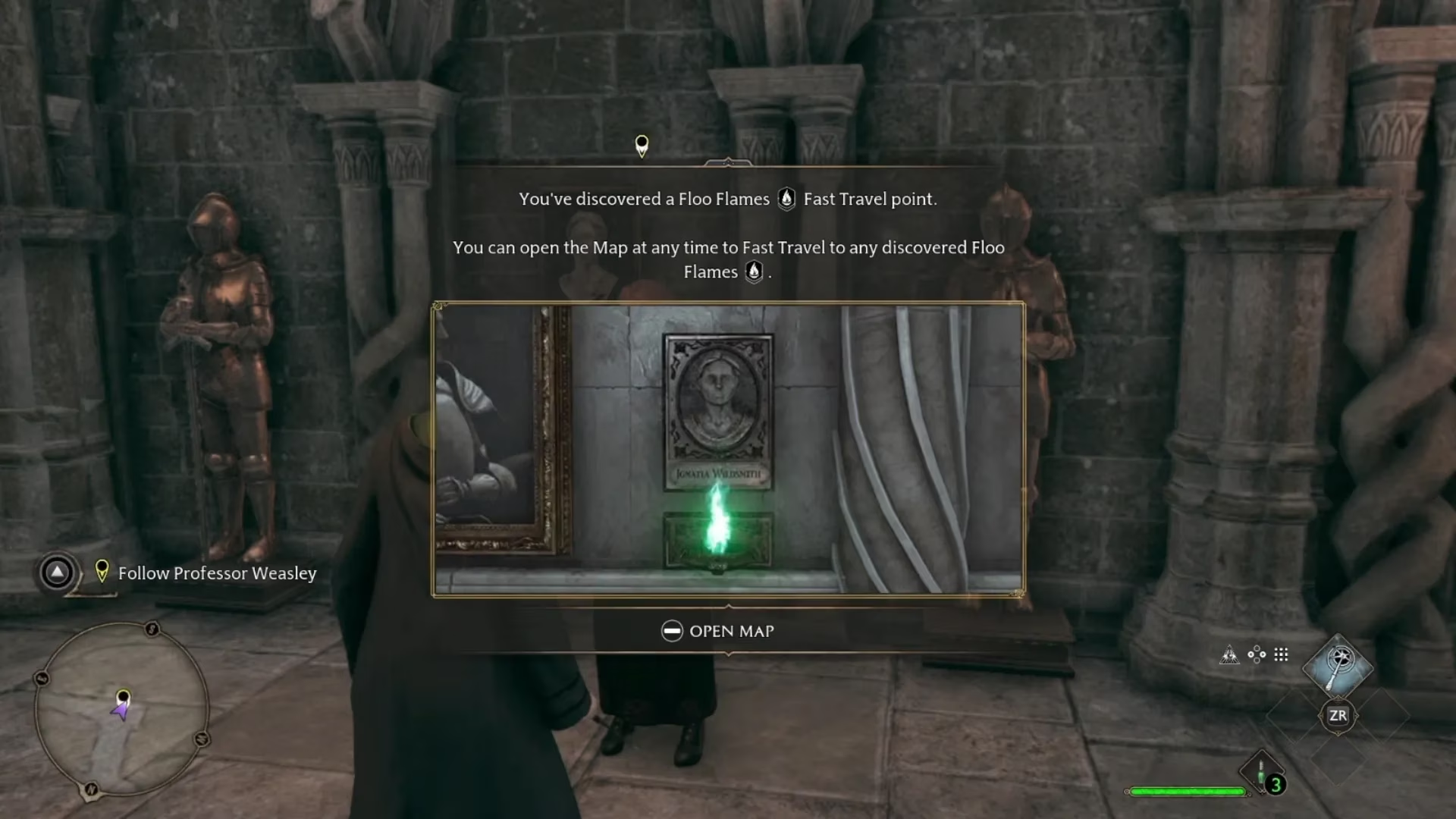
The open world beyond the castle gates stretches across the Highlands with an equal abundance of fast travel markers. This generosity was probably born from a good place—nobody wanted players to spend twenty actual minutes flying from one dinky hamlet to another, not when a spot of broomstick zipping is meant to be a treat, not a chore. Yet the result is a network so dense that the wide, breathtaking countryside starts to feel a little too small. It’s like the game gently takes your hand and says, “You don’t need to fly there, dear. Here, hold my powder.” And who are we to argue with that?
If Hogwarts Legacy 2 truly wants to deepen immersion, it could steer the Floo Flame mechanic into more interesting territory. The first, most straightforward path is to simply reduce the number of Floo points across the board. With fewer places to instantly materialize, players would be nudged back onto their brooms or into the rhythm of on-foot exploration—things that are genuinely satisfying once you give them a proper chance. Flying through a misty valley at dusk feels heroic; warping over it feels like cheating. A leaner network would also make the castle feel grand again, forcing students to actually navigate its winding halls and maybe stumble upon a gossiping portrait or two.
But there’s another, far more delicious possibility: make Floo powder a tangible resource. In the lore, witches and wizards throw a pinch of the glittering stuff into the flames to travel, so why not treat it as an in-game commodity? Picture this: every time you want to skip the scenic route, you spend a handful of powder from your pouch. Running low? Time to hunt for ingredient shops, complete side quests, or plunder bandit camps for a refill. It adds a sprinkle of economy to an action that currently costs absolutely nothing. The sequel could even play with scaling—a short hop to the common room might cost two pinches, but a long-distance leap to the far end of the map gobbles up five or six. That’s the sort of thing that makes you pause, weigh your options, and possibly decide that maybe the broom ride isn’t so bad after all.
This kind of change naturally invites comparisons to another superhero-sized sequel. Remember the debate around Marvel’s Spider-Man 2? Its fast travel was so seamless, so buttery smooth, that players barely used it because swinging through New York was an absolute joyride. The traversal itself was the reward. Hogwarts Legacy 2 could find itself in a similar spot if Avalanche pushes vehicle handling and flight mechanics even further. Imagine a sequel where brooms handle with more nuance, magical beasts gallop with real weight, and the world is so alive that you want to be in it rather than just leaping over it. In that light, making fast travel a conscious choice rather than a reflex feels less like a limitation and more like an invitation.
Of course, there’s a balance to strike. Players who only have a precious hour to game after a long day might not appreciate grinding for magical dust just to get to their next class. The system would need to be generous enough to avoid frustration—maybe a baseline amount of powder regenerates daily, or specific Floo points linked to main story hubs remain free. The goal isn’t to punish, but to add texture. A little friction can remind you that you’re in a world with rules, however whimsical they might be.
The truth is, fast travel in Hogwarts Legacy was never broken. It worked like a charm—pun fully intended. But in a sequel where expectations will be sky-high and every system will be scrutinized, small pivots can make a massive difference. Whether Avalanche chooses to trim the Floo Network down or transform powder into a resource that matters, they’d be nudging players toward a deeper, more tactile experience of the world they’ve built. And honestly? That feels like the most magical outcome of all.
This assessment draws from Game Developer to frame how Hogwarts Legacy 2 could rethink Floo Flame convenience into a more intentional traversal system. Developer-facing discussions often emphasize that fast travel is most effective when it supports pacing without erasing discovery, which aligns with the idea of either thinning Floo points to restore Hogwarts’ sense of scale or introducing Floo powder as a light resource sink to create meaningful trade-offs. Approached carefully—with generous baseline allowances and story-critical hubs kept frictionless—these changes could preserve accessibility while nudging players back into the castle’s “in-between” moments where exploration, encounters, and environmental storytelling actually live.