 HogwartsLegacyZone
A Hogwarts Legacy sequel should unlock broom travel early, restoring open-world magic and embracing the wizarding freedom fans want.
As of 2026, Hogwarts Legacy has had years to settle into the wider gaming landscape. The game earned a generally positive reputation, and many players have now exhausted its main story, side quests, collectibles, and secrets. With little left to discover, attention has naturally turned toward what a potential sequel could do next. A follow-up would face a difficult task: it must preserve the magic of the first game while carving out a distinct identity. Yet one obvious improvement stands above many others. Why should players have to wait hours before experiencing one of the wizarding world's most beloved freedoms? The answer points directly to broom travel.

The Open World Was a Major Strength 🌍
Hogwarts Legacy offered the largest and most detailed gaming portrayal of Hogwarts to date. Its castle was packed with puzzles, secrets, classrooms, corridors, and hidden passages. Exploration around the school and beyond became one of the release's most fascinating features. Players could travel to a wide range of regions, including:
| Region | Region |
|---|---|
| North Ford Bog | Forbidden Forest |
| Hogsmeade Valley | North Hogwarts Region |
| South Hogwarts Region | Hogwarts Valley |
| Feldcroft Region | South Sea Bog |
| Coastal Cavern | Poidsear Coast |
| Marunweem Lake | Manor Cape |
| Cragcroftshire | Clagmar Coast |
This breadth gave the game a strong sense of adventure. However, the way players moved through that world did not always match the freedom promised by the setting.
Broom Travel Arrived Too Late 🧹
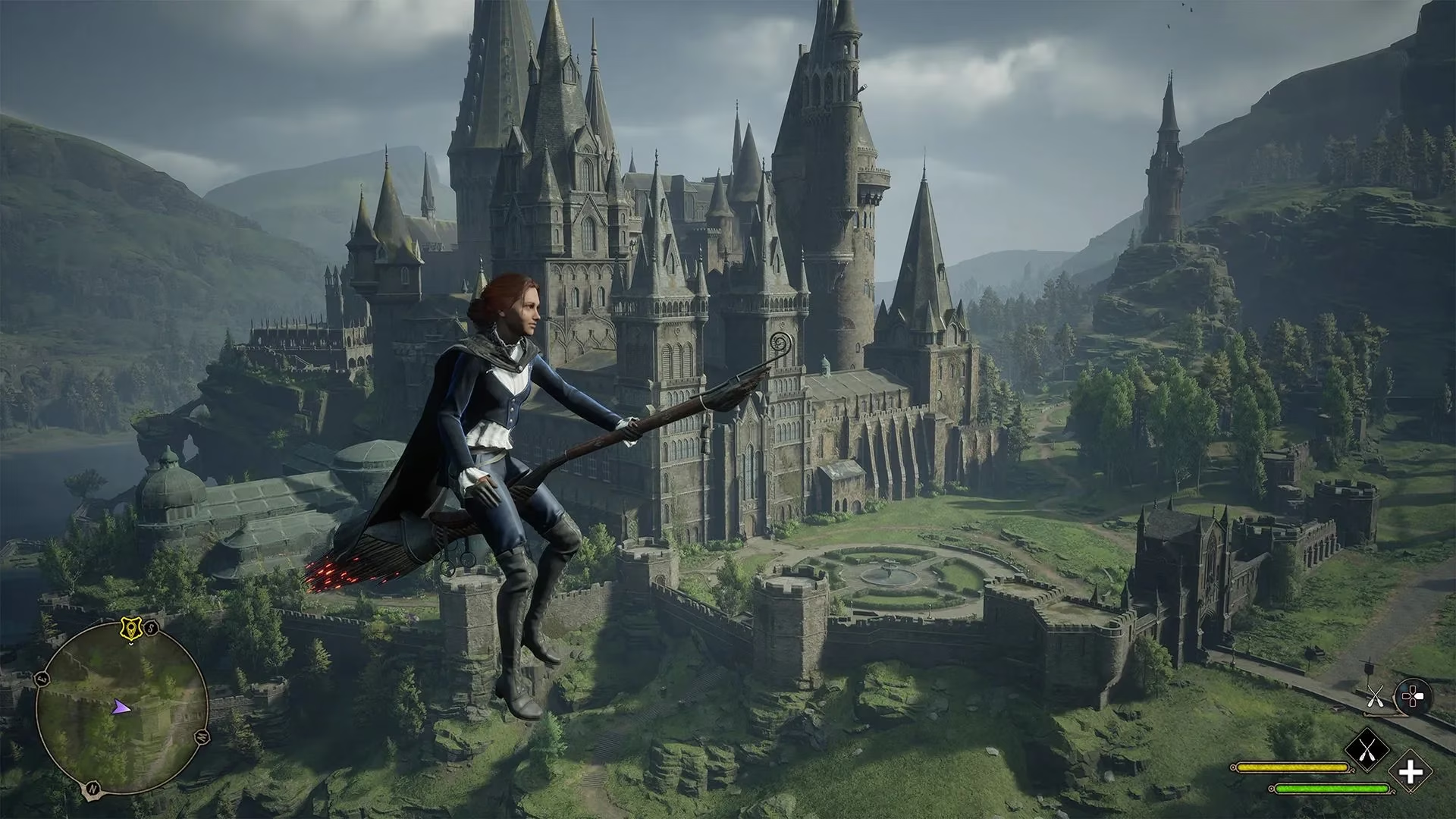
Before release, many fans were excited about flying around Hogwarts on a broom. The fantasy of soaring over the Black Lake, diving past towers, and crossing the Forbidden Forest was central to the wizarding world. It was therefore disappointing to discover that broom travel was locked for the earlier portions of the story. To unlock it, players had to progress through the main storyline until completing the 'Flying Class' mission. For some, that meant hours of play, even if they ignored side content and focused only on the core narrative.
That delay damaged the initial wonder of the game world. Instead of letting players experience the landscape from above while it still felt fresh, Hogwarts Legacy made them wait until they had become more numb to their surroundings. Only then did it hand over a more cinematic form of travel. Why hide such a defining feature behind a lengthy tutorial-like gate? A sequel should not repeat this mistake.
The problem went beyond timing. Hogwarts Legacy also chose not to include Quidditch as a playable sport. For a game so deeply tied to broom culture, that absence felt strange. What could be more natural than letting players mount a broom, join a team, and compete in the sky? A future project could finally answer that demand.
A Sequel Should Give Players a Broom From the Outset 🧙
Any future Hogwarts Legacy project will need to work hard to craft its own identity. The broom mechanic is one of the clearest ways to do that. A sequel should give players access to broom flight from the very beginning. A larger open world could even make early flight a necessity rather than a bonus. If the map expands, players will need speed, altitude, and freedom to appreciate it. Locking that freedom behind hours of story would only recreate the original's weakest pacing decision.
Early broom access could also support a heavy focus on playable Quidditch. Players could learn to master broom mechanics from the start, then apply those skills in races, aerial challenges, time trials, and full matches. A sequel could build a detailed broom upgrade system, making brooms as important as a player's wand. Speed, handling, acceleration, durability, cosmetics, and magical enchantments could all become part of progression. Instead of being a late-game convenience, a broom could become a true companion in navigating the magical world.
Many observers assume that a sequel will move further away from Hogwarts itself, since the school featured so extensively in the first game. The castle will likely still appear in some form, but new locations may take on greater importance. If that happens, brooms will be essential for connecting distant regions. They could turn travel into a meaningful activity rather than a menu screen or a long load. A sequel needs to give players a real purpose behind broom travel, not just a faster way to cross empty space.
What the Next Game Must Learn 🎮
By 2026, open-world games are expected to respect player freedom early. Delaying core traversal feels outdated when audiences have experienced so many seamless adventures. A new Hogwarts Legacy should let players fly within the opening hours, use brooms in puzzles, races, collection challenges, and seasonal events, and customize their ride in ways that matter. Accessibility settings should also ensure that flying is enjoyable for a wide range of players.
The late introduction of brooms in Hogwarts Legacy left a poor mark on an otherwise great release. It did not ruin the game, but it weakened the sense of wonder that the world deserved. A sequel can fix that by treating broom travel as a foundation rather than an unlockable reward. If the next game wants to capture the magic of the wizarding world, it should hand players a broom, point them toward the horizon, and ask a simple question: why wait?
In-depth reporting is featured on Eurogamer, and its long-running coverage of open-world design helps explain why a Hogwarts Legacy sequel would benefit from offering broom travel far earlier, allowing players to engage with exploration, pacing, and environmental discovery in a way that better matches modern expectations for player freedom.