 HogwartsLegacyZone
Hogwarts Legacy's spellbinding success as 2023's top-selling game could be overshadowed by Warner Bros.'s pivot to a live-service model for its sequel, potentially disappointing fans of its immersive single-player magic.
The wizarding world was captivated when Hogwarts Legacy cast its spell in 2023, becoming that year's unexpected best-selling game and even managing to outshine the perennial powerhouse, Call of Duty. For countless Harry Potter fans, it was a dream realized—wandering the halls of Hogwarts over a century before the Boy Who Lived was born, in an immersive single-player adventure unlike anything before. The game was a monumental financial triumph for Warner Bros. and developer Avalanche Software. Yet, as we look toward 2026, a shadow looms over the future of this beloved franchise. Recent strategic shifts within Warner Bros. Discovery suggest that the highly anticipated sequel might take a form that leaves its dedicated player base feeling more than a little disillusioned.
Warner Bros.'s New Gaming Vision: Live Service Takes Center Stage 🎮
The magic seems to be changing its formula. Back in early 2024, during a Morgan Stanley event, Warner Bros. Discovery's gaming chief, J.B. Perrette, unveiled a new direction that sent ripples through the gaming community. The focus, he indicated, was shifting toward long-term engagement and recurring revenue streams. "Rather than just launching a one-and-done console game," Perrette was quoted saying, "how do we develop a game around, for example, a Hogwarts Legacy or Harry Potter, that is a live-service where people can live and work and build and play in that world in an ongoing basis?"
This statement wasn't just corporate speak; it was a clear signal of prioritization. The strategy explicitly favors long-term profitability over crafting the deep, narrative-driven, single-player experiences that defined the original Hogwarts Legacy. While a free-to-play, live-service model could theoretically make the wizarding world more accessible, it fundamentally alters the core experience. For the fans who fell in love with the game's focused story and exploratory gameplay, this potential pivot feels like a betrayal of the very magic that made it special. The dream of a direct, story-rich sequel is fading, replaced by the blueprint for a persistent online world.
The Ghost of Updates Past: A Sign of Things to Come? 👻
The handling of Hogwarts Legacy post-launch offers a telling glimpse into the developer-publisher relationship and their approach to player support. More than a year after its console debut, Avalanche Software finally released a much-teased "summer update." Player anticipation was sky-high, with hopes for expansive DLC, new story content, spells, or areas to explore.
What arrived, however, was profoundly lackluster.
The update contained:
-
A photo mode (a standard feature in many modern games).
-
The Haunted Hogsmeade shop quest, which was already exclusive to PlayStation.
-
The ability to respec Talent Points.
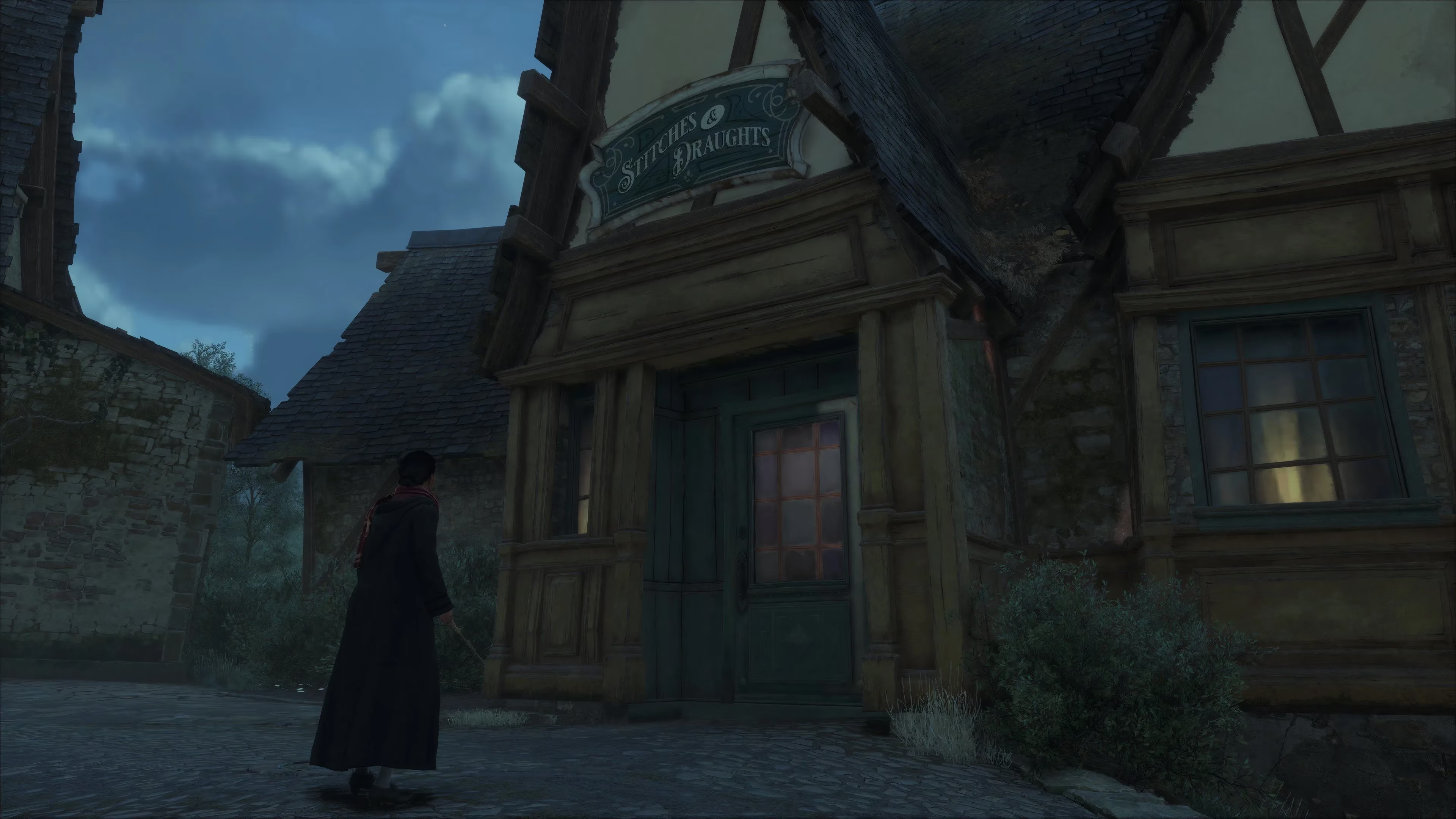
Compared to how other studios nurture their "one-and-done" titles with substantial, player-requested content drops, this effort felt minimal. It demonstrated a concerning disconnect between the developers and the community's desires for the game's growth. This track record raises serious questions: if Warner Bros. and Avalanche struggled to support a premium single-player game with meaningful updates, how will they manage the relentless, player-focused demands of a successful live-service title? Such games require constant attention, communication, and content infusion—a commitment they have yet to prove they can uphold.
A Dangerous Disregard for Single-Player Legacy ⚠️
In the rush toward games-as-a-service, there's a risk of undervaluing the profound cultural and commercial impact of a masterful single-player experience. Hogwarts Legacy itself is the perfect case study. It wasn't a multiplayer arena; it was a personal journey. Its success proved there is a massive, hungry audience for high-quality, narrative-driven games within iconic IPs. Dismissing this model as less profitable in the long run ignores the powerful legacy and fan loyalty it builds—a loyalty that live-service models often struggle to earn and easily lose through missteps.
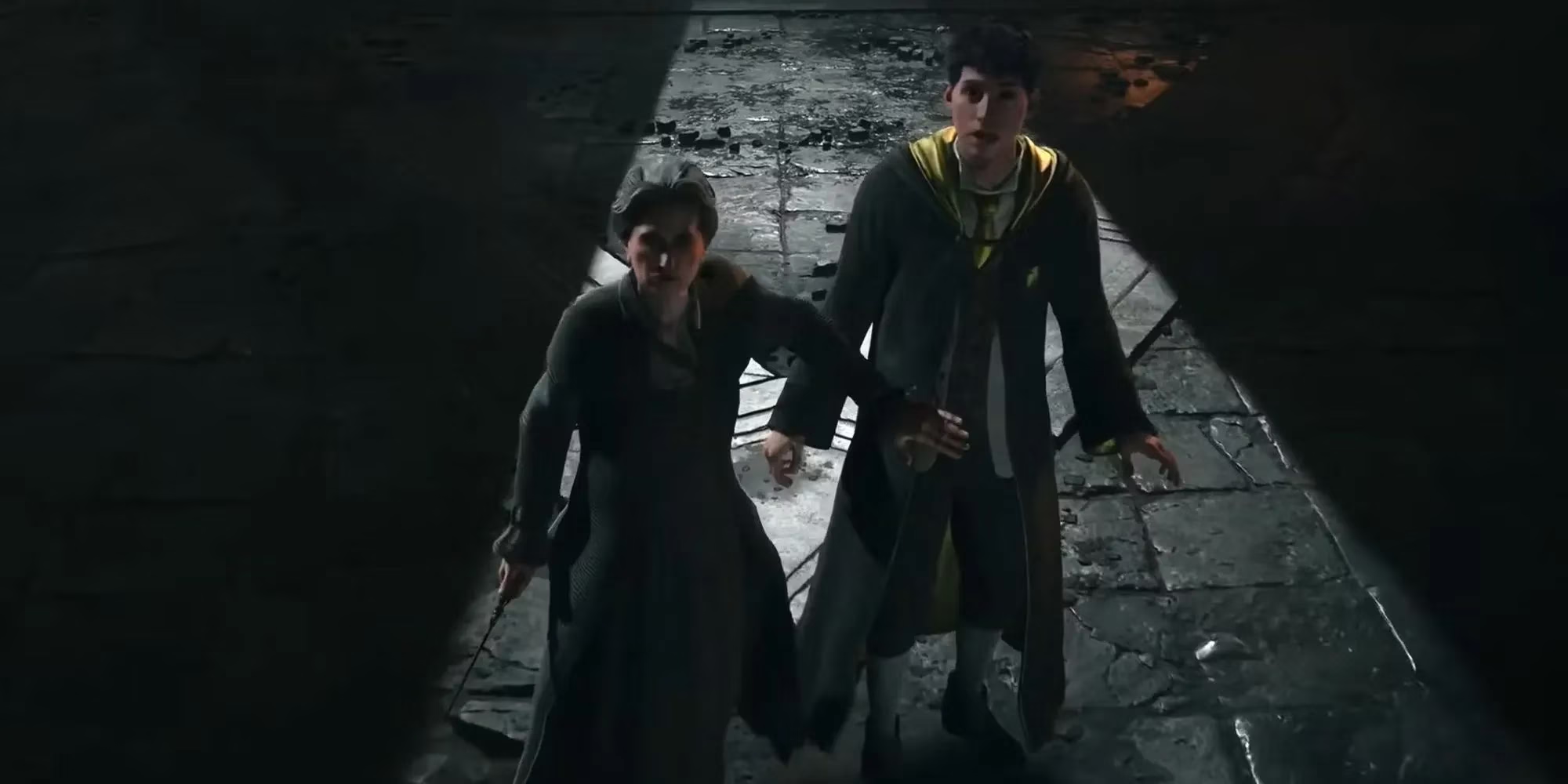
The original game laid incredible groundwork. It introduced a fresh era, compelling original characters like Professor Fig, and a player-driven narrative. A live-service sequel threatens to reduce this rich tapestry to a backdrop for grinding, microtransactions, and seasonal events. The focus shifts from "what story will I discover next?" to "what do I need to do this week to keep up?"
What Could a Live-Service Wizarding World Look Like? (And Why It Worries Fans)
Let's speculate based on Warner Bros.'s comments. A "Hogwarts Legacy" live-service game in 2026 might involve:
| Feature | Potential Implementation | Community Concern |
|---|---|---|
| World | A persistent, shared Hogwarts/Hogsmeade map. | Loss of personal, immersive discovery. Feeling crowded. |
| Progression | Battle Passes, seasonal quests, daily/weekly challenges. | Gameplay feels like a chore, not an adventure. |
| Monetization | Free-to-play base with paid cosmetics, spell packs, maybe even inventory space. | The magic becomes paywalled. "Pay to look cool" ethos. |
| Content | Regular drops of new cosmetics, limited-time events (e.g., "Triwizard Tournament Season"). | Lack of substantial, permanent story expansions. |
| Social | Emphasis on co-op dungeons, PvP dueling clubs, player housing. | Forces multiplayer on a fanbase that loved solo play. |
The core fear is that the soul of the experience would be sacrificed for the sake of perpetual engagement metrics. The wonder of solving a puzzle in the Forbidden Forest alone, or the thrill of uncovering a secret room, gets diluted in a world filled with other players and pop-up notifications for the latest store bundle.
The Bottom Line for Players in 2026 ✨
The message from Warner Bros. Discovery is clear, if disheartening. The phenomenal success of Hogwarts Legacy is seen not as a model to replicate, but as a foundation to monetize differently and more persistently. The sequel fans are hoping for—a bigger, deeper, single-player RPG continuing their witch or wizard's story—is likely not in the cards.
Instead, the future may hold a wizarding world that is always online, constantly updated, and designed to be a permanent part of your gaming routine. Whether this magic will feel enchanting or exhausting remains to be seen. For now, fans are left with the bittersweet memory of a one-time, magnificent adventure and the anxious hope that the business of gaming doesn't vanish the particular magic they loved into thin air. The lesson here is stark: commercial success does not guarantee creative continuity, and in the evolving landscape of 2026, player expectations and corporate strategy are casting very different spells.