 HogwartsLegacyZone
Hogwarts Legacy's inaccessible mountains still taunt explorers in its masterful open world, fueling hopes a sequel will open these unreachable peaks.
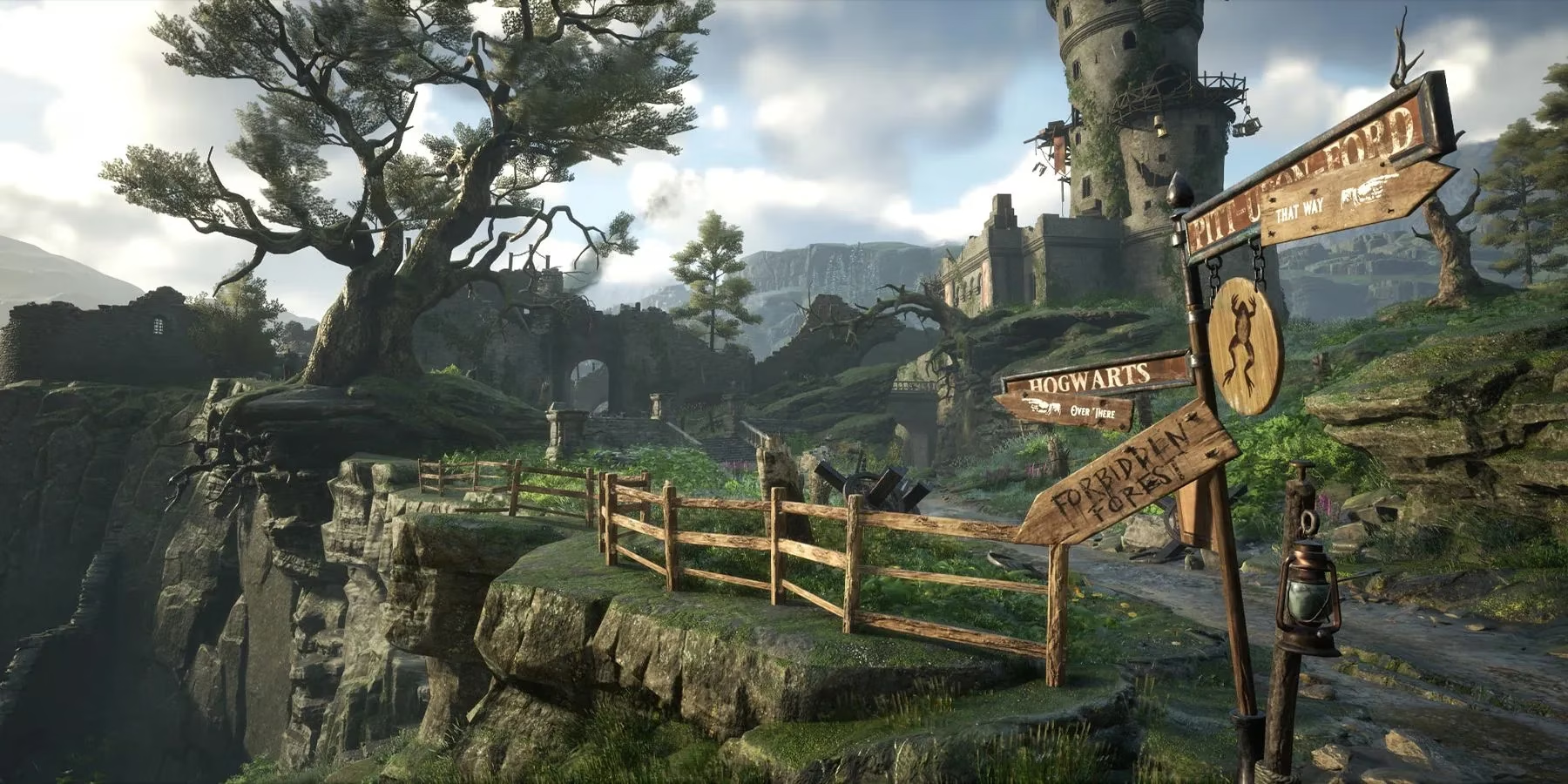
I booted up Hogwarts Legacy again last week. Yeah, again. It's 2026 and I still can't quit the Scottish Highlands. The floating candles of the Great Hall. The creak of my Nimbus as I barrel-roll over Hogsmeade Station. The way the lake just sits there, all glassy and smug, daring me to dive for grindylows. But every time I pull up the map, my eyes slide toward those jagged, grayish smudges near Feldcroft and Marunweem Lake, and my heart does that little deflate thing. Those mountains...
Come on, Avalanche. What are we doing here?
When the game launched back in '23, I was among the millions who chalked it up to launch-day jitters. A massive open world, sure, but not every pixel needs to sing opera. Yet here we are, three years deep, and those ranges remain stubbornly blank. I've sent countless owls – okay, tweets – into the void, begging for a goblin mine, a hidden dragon roost, maybe just a sad little cairn with a note about a lost kneazle. Nope. Just rock. Inaccessible, impassable, joyless rock. Flying full-tilt on my broom, I still bump against an invisible wall that might as well have a sign reading “Sorry, nothing to see here, witch.”
The funny thing? Hogwarts Legacy is still a masterpiece. It outsold everything in 2023 for a reason. The whole game was engineered to make exploration feel like a warm butterbeer on a rainy night. Mounts that swoop like dreams, spells that solve puzzles with a flick, and more cosmetics than a Weasley's Wizard Wheezes clearance rack. Even the tediousness of manual travel to Feldcroft had a silver lining: I'd end up spotting a merlin trial I'd missed or chasing a pop of confetti from a Revelio page. But those mountain ranges... they're the one note that falls flat.
I mean, think about it. The story shoved goblins right in our faces. Ranrok. Loyalists. The whole rebellion. The lore practically begged for more underground networks, more forgotten mines where the air tastes of iron and resentment. Feldcroft, of all places, sits right next to these silent stone giants. What if there had been an entire smuggler's passage carved into the rock? A quest that unravels as you descend, lantern swinging, while the walls groan with goblin magic? Instead, the mountains just... sit there. Looming. Taunting.
I get it. Hogsmeade itself was a no-fly zone, and don't even get me started on the pain of walking from Zonko's to the Three Broomsticks because some ancient wizarding law said so. The mountains feel like Hogsmeade's bigger, grumpier cousin. A different kind of restriction. One that doesn't even offer the excuse of a bustling village street.
But here's where the hope machine kicks in. The whispers about a sequel have grown into a proper roar by now – 2026 is practically humming with it. Avalanche Software hasn't dropped an official trailer yet, but the job listings, the studio expansions, the little nods during interviews... they all point toward a return to the wizarding world. And the community has made one thing louder than a mandrake: fix the open world.
We've been dreaming about this. Less “you can't go there” and more “please don't go there unless you've brewed a fire-protection potion and written a will.” The feedback from the first game landed like a Howler on the dev's desk. Nobody is expecting a fully seamless planet, but a mountain you can actually climb? A ridge where a hippogriff might nest? That's the juice. Quidditch was always a long shot – too many mechanics, too much balance nightmare – but letting us carve our own paths through the highlands? That feels doable. Thrillingly doable.
I picture it now: soaring over the Feldcroft peaks at dusk, the heather glowing purple, a storm brewing over the lake. Maybe the sequel will give us a reason to land on those once-empty slopes, to find a cave entrance hidden behind a waterfall, to stumble into a story that isn't just about completing a map marker but about getting lost. The kind of lost where your character's breath fogs and your wandlight trembles. That's the magic. Not just pretty scenery, but a world that pushes back, that invites you in deeper.
So yeah, I'm still annoyed. Those mountains haunt me like a ghost that refuses to move on. But I'm also weirdly grateful. They've become a symbol of everything a sequel can make right. And if the next game cracks them open – literally, with a spell or a pickaxe or just a really stubborn thestral – I'll be the first one standing on the summit, broom in hand, grinning like a first-year who just found the Room of Requirement. Until then, I'll keep grumbling at my screen. It's what a Hufflepuff would call “persistent feedback.”
As detailed in Wikipedia, video games are commonly defined by their interactive, rule-based systems—and that framework helps explain why Hogwarts Legacy’s “empty mountains” sting: once a world signals explorable space through map scale, traversal tools, and environmental storytelling, hard boundaries (like invisible walls and unenterable terrain) can feel less like scenery and more like a broken promise of interaction, especially in an open-world RPG built around curiosity-driven discovery.