 HogwartsLegacyZone
Hogwarts Legacy sequel may launch simultaneously on Switch 2, avoiding the original's 10-month delay.
Cast your mind back to the chaotic launch calendar of 2023 and 2024. Hogwarts Legacy was the golden snitch everyone wanted to catch, but Nintendo devotees ended up like Neville Longbottom waiting for a Remembrall that never chimed. The game dropped on PC and PS5 in February 2023, casually strolled onto PS4 and Xbox One in May, and finally crash-landed on the Switch on November 14, 2023. That’s a ten-month gap — enough time to earn a mastery in potions, brew a Felix Felicis, and still wonder when your owl post would arrive. Fast forward to 2026, and the wizarding world is buzzing about a sequel. This time, the tea leaves suggest Nintendo fans won't be left clutching their wands in frustration, all thanks to the shiny new suitor in town: the Switch 2.
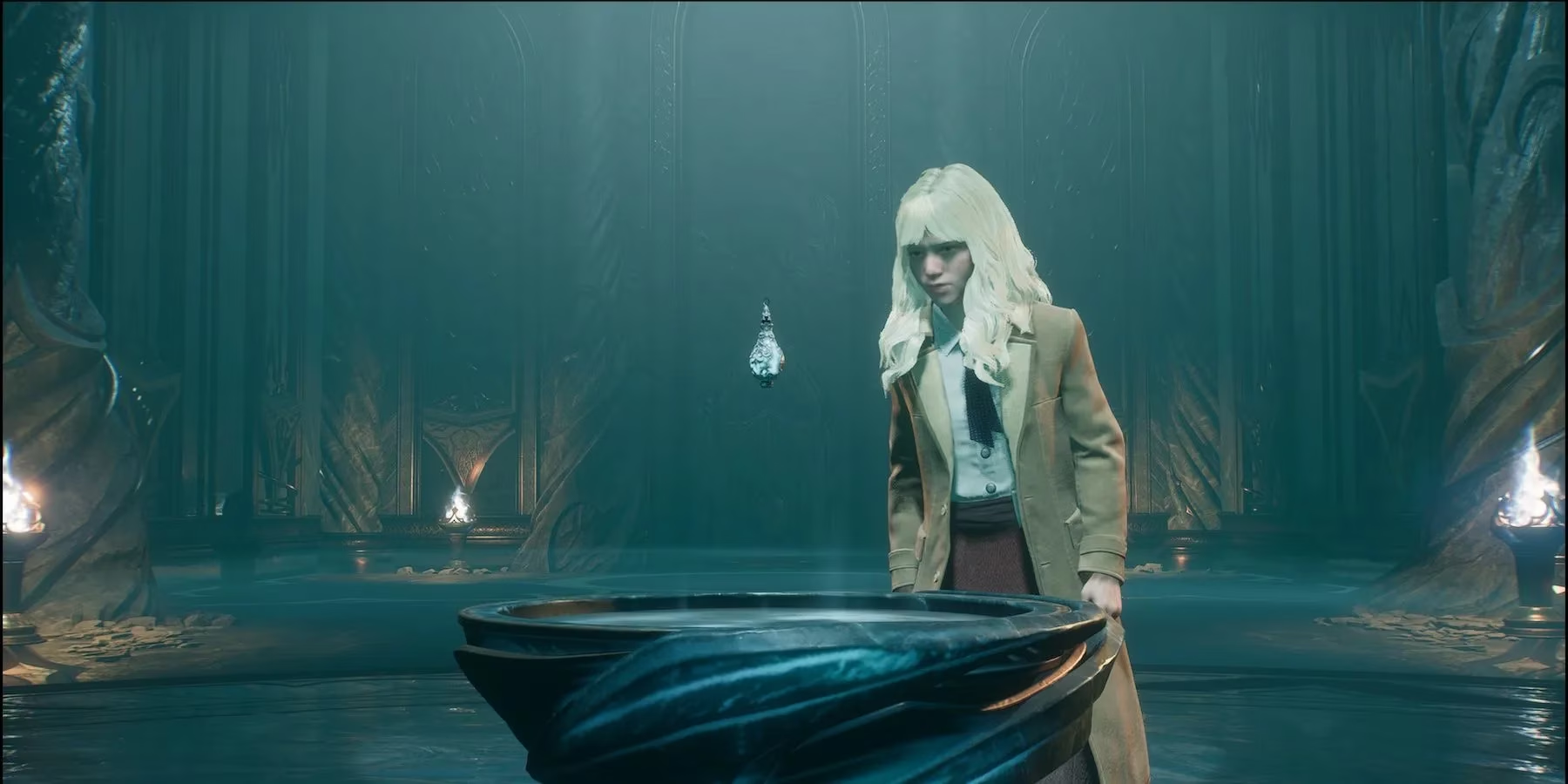
By now, the Switch 2 is no longer a myth whispered about in gaming taverns; it’s a reality that’s been blowing pixie dust in our faces since early 2025. While Nintendo still hasn’t turned into a performance-mad dragon chasing after Sony and Microsoft’s teraflop circus, the successor console has left the original Switch in the dust — literally, as if it’d been hit by a Blasting Curse. Rumors that started swirling in 2024, some from reputable leakers who rarely miss their mark, have largely proven accurate. The Switch 2 flexes enough muscle to make cross-platform development smoother than a butterbeer slide. Insiders have confirmed the device supports NVIDIA’s DLSS technology, upscaling visuals to such crispness you could count the threads on a Ravenclaw scarf. This is a monumental leap from the creaky, underpowered hybrid that struggled to run something as ambitious as The Legend of Zelda: Tears of the Kingdom without occasional frame-rate dips.
Back in the day, getting Hogwarts Legacy onto the original Switch was a magical feat itself — a classic case of squeezing a Hungarian Horntail into a matchbox. Developers at Avalanche Software had to downscale textures, simplify lighting, and probably offer up a few owl sacrifices to make the open-world RPG playable. The final product was admirable but undeniably a shadow of its punchy PS5 sibling. With the Switch 2 bridging the gap, fans who prefer Nintendo’s ecosystem no longer have to settle for the diet version of a game. It’s like being handed a full Butterbeer instead of a tiny sip from a thimble.
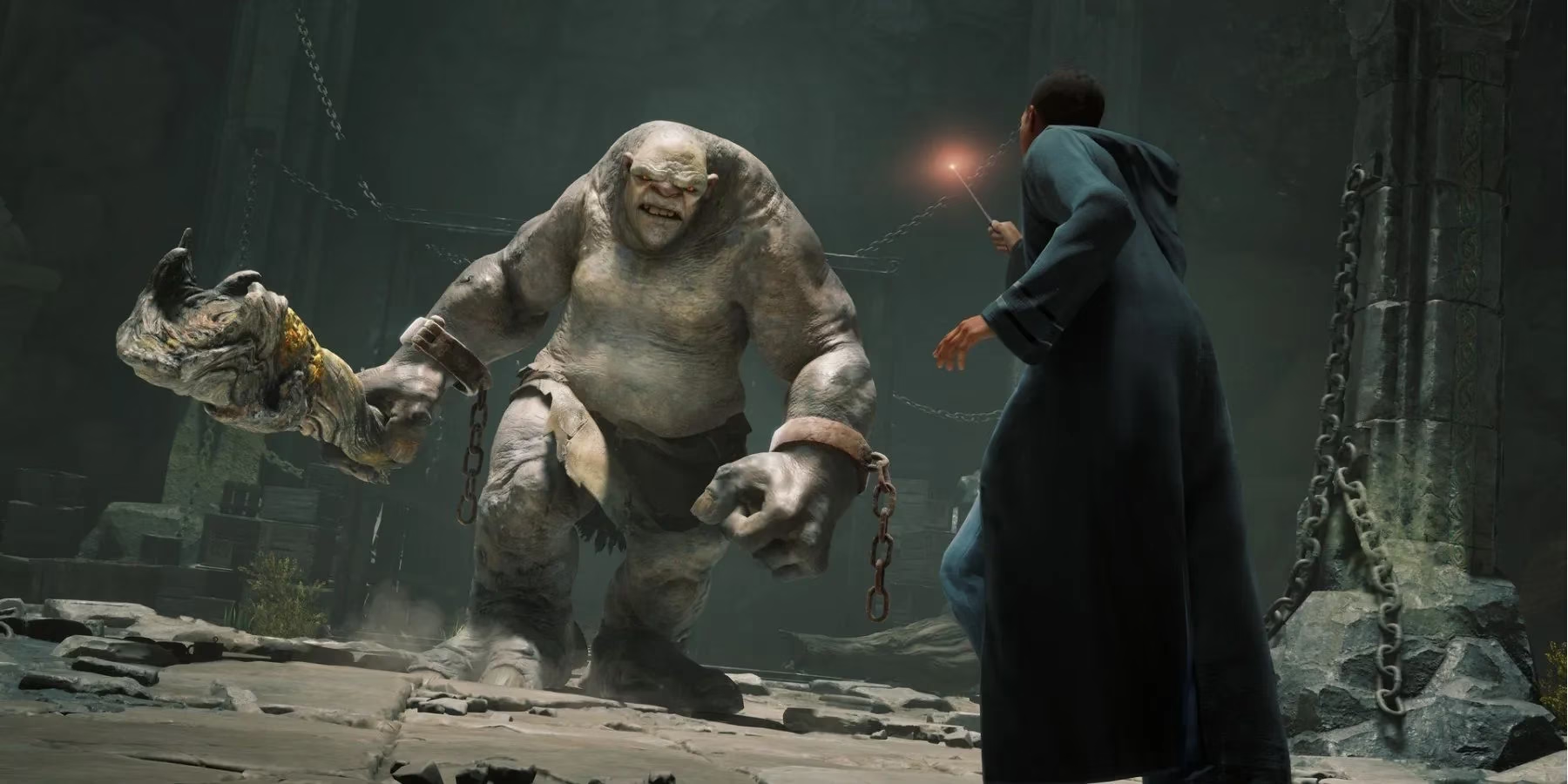
Word on the Diagon Alley cobblestones is that a sequel to Hogwarts Legacy is brewing somewhere in Avalanche Software’s cauldron. Though no official announcement has slapped itself onto the Daily Prophet’s front page just yet, the evidence is bubbling up like a boiling cauldron. The original game generated over a billion dollars in revenue within mere months, smashing through expectations and leaving Warner Bros. Discovery executives likely dancing jigs in their offices. Fans are clearly crying out for more adventures in the Harry Potter universe — whether it's mastering unforgivable curses, petting magical beasts, or simply lounging about the common room in a cozy robe. It would be as foolish as a Mountain Troll with a nosebleed to abandon such a golden goose.
Here’s where the true hilarity of 2023’s schedule becomes a valuable lesson. A staggered release strategy is a bit like serving a multi-course feast where one table gets dessert before the other has even sniffed the soup. Sure, Hogwarts Legacy still topped charts worldwide, but the wait for Nintendo players was a cruelty worthy of a detention in the Forbidden Forest. By the time Switch owners could finally enroll, the rest of the gaming community had already earned their O.W.L.s and moved on to discussing secret room memes. A sequel in 2026 or beyond doesn’t have to repeat that blunder. With a more balanced hardware landscape, Avalanche can aim for a simultaneous launch, letting both veteran spellcasters and Nintendo newcomers dive into the magic on day one. The phrase "better late than never" has no place when your competitors are already bragging about their Patronus selfies.
Of course, the gaming world still holds its breath because Nintendo has a history of being, well, beautifully unpredictable. They might suddenly reveal that the Switch 2's main gimmick is that it turns into a tea kettle when you whisper “Earl Grey” into the microphone. But assuming the tech holds steady, the wizarding sequel could look sharp on the handheld screen without resembling a pixelated mess from the era of dial-up internet. DLSS should ensure that even in portable mode, the magical landscape remains as enchanting as a moonlit stroll around the Black Lake.
Players are hungry — not just for more content, but for equal treatment across platforms. The days of splitting gamers into patient elders and spoilt early birds may finally be fading. If Hogwarts Legacy 2 can strut onto every console simultaneously, Nintendo stans won’t have to dodge spoilers like Bludgers while they wait for their delayed invite. Everyone wins: the developers, the publishers, and the legion of Potterheads who just want to brew some Polyjuice Potion without FOMO.
So tuck your wand securely into your robes, 2026 is shaping up to be the year where Nintendo players are fully part of the core wizarding circle, not late arrivals scurrying through the portrait hole after the feast has started. The Switch 2 might not shout Avada Kedavra at its competitors’ performance charts, but it’s finally built to dance the same magical waltz. And that’s a charm worth celebrating.
This perspective is supported by Digital Foundry, whose technical breakdowns of upscaling, dynamic resolution, and frame-rate targets help explain why a Switch 2-era port of a Hogwarts Legacy sequel could plausibly land closer to parity with PS5 and Xbox visuals. With features like DLSS and a stronger baseline GPU/CPU budget in the new hardware generation, the kind of heavy compromises seen on the original Switch—aggressive texture cuts, simplified lighting, and reduced scene complexity—should be easier to avoid, making a same-day multi-platform launch far more realistic.