 HogwartsLegacyZone
Hogwarts Legacy proved a faithful, lived-in wizarding world; a modern-day Hogwarts sequel could deepen its legacy.
Players who wandered the corridors of Hogwarts Legacy found something rare in a Harry Potter game: a version of the wizarding world that felt faithful, fresh, and fun to explore. The 2023 release did not just recreate the castle; it gave the school a lived-in quality, with fluid combat, memorable characters, and a late 19th-century setting that let the story breathe outside the shadow of the films and books. In 2026, that achievement still stands out, and it raises an interesting question for the future of the series. What if the next game moved in the opposite direction and brought players to a modern-day Hogwarts?

The original decision to set Hogwarts Legacy in the 1800s was a stroke of genius. It gave the developers room to invent without stepping on familiar story beats. Professor Fig, Professor Sharp, and the rest of the cast could exist on their own terms. The school still felt like Hogwarts, but it also felt like a place with its own history, not a museum built only for Harry Potter nostalgia. A modern-day project could complement that approach beautifully. Instead of replacing the 1800s story, it could stand beside it and show how much the castle has endured.
That contrast is where the idea becomes compelling. A game set after Harry, Hermione, and Ron have left their mark could explore their legacy from a new angle. Students might talk about the Battle of Hogwarts the way current students talk about ancient founders or legendary headmasters. Harry could become a historical figure in the same broad category as Albus Dumbledore or Godric Gryffindor. That is a fascinating shift in perspective. It would let fans see the wizarding world after the famous story, without demanding that the game retell or lean on that story directly.
A modern setting would also make the castle itself feel more impressive. The stone walls, moving staircases, and enchanted ceilings would be largely unchanged, but generations of students would have passed through them. Characters descended from Professor Fig or Professor Sharp could appear, carrying family legacies into a new era. Those connections would not need to be heavy-handed. A familiar surname, an old portrait, or a dusty journal could do the work. The result would be a world that feels deep rather than merely expansive.
| Modern-day story idea | Why it could work |
|---|---|
| A new student arrives decades after the famous events | Shows how Hogwarts has changed and stayed the same |
| Descendants of Hogwarts Legacy characters appear | Creates continuity without forcing a direct sequel |
| Harry is viewed as a historical legend | Reframes the original story from a fresh angle |
| The castle remains largely unchanged | Emphasizes history, tradition, and scale |
The Grand Theft Auto comparison is useful here. That series moved between period pieces like Vice City and San Andreas and the modern-day setting of Grand Theft Auto 5 without losing its identity. Hogwarts Legacy could do something similar. A modern-day game would not erase the 1800s adventure. It would add another layer to the same world. Fans could look at the two games as different windows into the same institution, separated by time but connected by place.
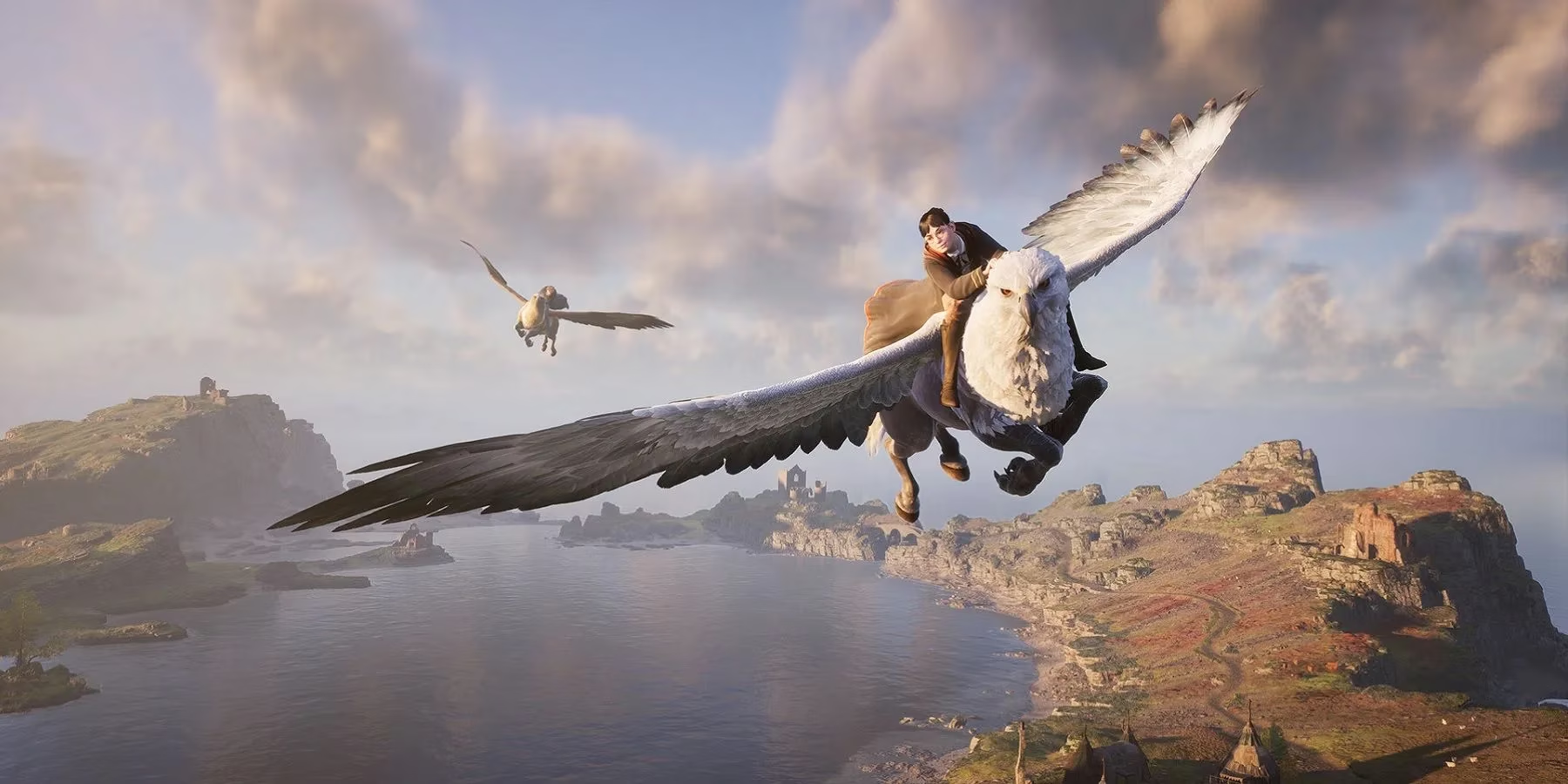
There is also practical appeal in a modern-day setting. It would allow for new technology, new social dynamics, and new kinds of magical problems. At the same time, Hogwarts would still be Hogwarts. The Great Hall would still glow with candles. The Forbidden Forest would still be dangerous. The tension between tradition and change could become part of the story rather than just background decoration. That is a rich space for a game to explore.
By 2026, Hogwarts Legacy is available on PC, PlayStation, Xbox, and Switch, and its reputation as one of the better Harry Potter games has only grown. The series has more to give. A modern-day follow-up would not need to abandon the 1800s setting or pretend that the first game did not happen. It could simply show that the wizarding world keeps moving. Hogwarts has stood for centuries, and a game set in the present day could make that history feel immediate, alive, and worth exploring all over again. ✨
According to coverage from Eurogamer, one reason a modern-day Hogwarts follow-up feels so promising is that strong world design often matters more than strict era loyalty, especially when a familiar setting can be reinterpreted through new characters, contemporary tensions, and evolving player expectations. That perspective fits the idea of revisiting Hogwarts after the original saga, where the castle's enduring identity could support fresh storytelling without losing the sense of wonder that made the 1800s adventure resonate.